

How to Paint T-Shirts with Sponges

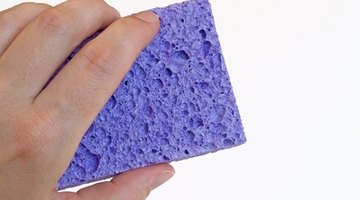
Sponge painting on T-shirts brings out the artist in everyone. This is truly a craft that all ages can participate in and enjoy. Painting sponges come pre-cut in all shapes and sizes, or grab a pair of utility scissors and a kitchen sponge and make your own design.
Things You Will Need
- T-shirt
- Iron
- Utility scissors
- Large piece of heavy cardboard or an old box
- Thumb tacks
- Clothing paint
- Styrofoam plate or paint palette
- Rubber gloves
- Sponges
- Paper towels
-
Buy a shirt in at least one size larger than you need to allow for shrinkage. Wash and dry the shirt on low heat to reduce shrinkage. Iron the wrinkles out of the entire shirt.
-
Cut a piece of heavy cardboard with utility scissors to fit the shape of the body of the T-shirt.
-
Secure the shirt to the cardboard with thumbtacks so you have a stable base for painting and the paint won't bleed through.
-
Spread newspapers on a table and lay the T-shirt flat on top.
-
Pour fabric paint on one side of the plate or palette; don't add too much at once -- you can always add more. Sponge painting on T-shirts takes a good deal of paint, so consider using a separate paper plate for each paint color you use.
-
Put on rubber gloves and grab a piece of sponge.
-
Soak each sponge shape in clean water, then wring out until the sponge is damp.
-
Put the sponge in the paint so it covers the entire bottom of the sponge design. Move the paint around on the plate for better sponge coverage. Add more paint if needed. Don't completely soak the sponge in paint or the edges of your design will be fuzzy. If too much paint is applied to the sponge, blot on a paper towel.
-
Hold the sponge directly over the top of the T-shirt, then bring the sponge down and set it where you want the design. Use the sponge like you would a stamp. For a more dappled effect, use less pressure on the sponge when stamping out the design. No need to let the paint dry when changing colors; sponging on all colors at the same time gives more of a blending effect.
Tip
Find fabric paint at Michaels, Hobby Lobby or any of the major craft chain stores. Experiment with paint amounts, colors and sponge texture on an old T-shirt first. Rinse sponges in cold water immediately after use and hang to dry for repeated use. No need to let the paint dry when changing colors; sponging on all colors at the same time gives more of a blended effect.
Warning
Always supervise young children when using paint products.
Tips
- Find fabric paint at Michaels, Hobby Lobby or any of the major craft chain stores.
- Experiment with paint amounts, colors and sponge texture on an old T-shirt first.
- Rinse sponges in cold water immediately after use and hang to dry for repeated use.
- No need to let the paint dry when changing colors; sponging on all colors at the same time gives more of a blended effect.
Warnings
- Always supervise young children when using paint products.
Photo Credits
- hand with sponge image by sparkia from Fotolia.com
- hand with sponge image by sparkia from Fotolia.com
More Articles

