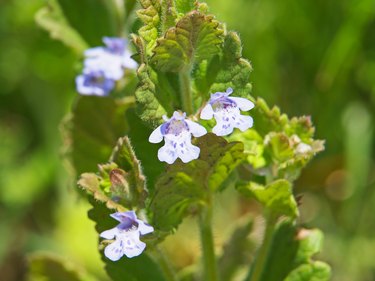
Weeds in your lawn and garden can be pesky and frustrating, and some can become invasive and prevent your flowers, vegetables and even your lawn from growing properly. If you hesitate to use a commercial product, such as Roundup, to get rid of weeds, there are some organic alternatives that you can create from everyday items in your home. It's important to note, however, that "organic" doesn't mean safe, because many organic products may be harmful to people and pets as well as plants.
Use Household Vinegar
Video of the Day
One method of killing weeds is to use vinegar. Some gardeners swear by undiluted white vinegar in a spray bottle, but because vinegar will kill all plants, not only the weeds, it is important to be careful where you spray it.
Video of the Day
It is best to apply a vinegar treatment on a clear day with a forecast that is free of rain and guarantees lots of bright sunlight. The sun's rays activate the weed-killing agent in the vinegar, so wait for the right weather conditions before you soak your weeds. The easiest application method is to spray the solution directly on the weeds you wish to eliminate.
Keep in mind that applying vinegar is not a permanent method of weed removal. If the weed is particularly aggressive, you may need to apply vinegar multiple times to keep it from growing. These repeated applications will also harm nearby plants.
A vinegar mixture does not translocate through a plant's foliage to the roots as many synthetic chemical herbicides do. And for weeds with stubborn taproots or a network of underground rhizomes, the vinegar may kill the top growth while not offering a permanent solution for eradicating weeds.
Use Homemade Mulch
Another alternative for keeping weeds at bay is to introduce mulch to your garden. You can make your own mulch by using cut grass or fallen leaves. If you use leaves, collect them into a pile and run over them with a lawn mower to break them into smaller pieces. According to Bob Vila, the ideal size is about the size of a dime. The resulting mulch can then be spread over areas where weeds are a problem and prevent the development of more weeds. Weed seeds germinate when exposed to sun, and applying a layer of mulch will block the sunlight from reaching them, keeping them dormant.
The downside of using mulched leaves is that they decompose relatively quickly, so a good alternative may be to use wood chips. When it is time to prune your trees or shrubs, run the branches through a wood chipper. This will break the branches down to the size you would typically get in store-bought mulch.
Try Physical Weed Removal
Although homemade alternatives to Roundup may help eliminate weeds, they are not guaranteed to kill them all. Weeds have a bad habit of returning even if you treat them with a commercial weed killer. If you want to try a physical method, you can simply uproot a weed. This can be accomplished by grasping the weed at its base and pulling to remove it, followed by digging up as much of any remaining root system as possible. If you have lawn weeds, you can use a weeding tool that will penetrate the ground to help with root removal.