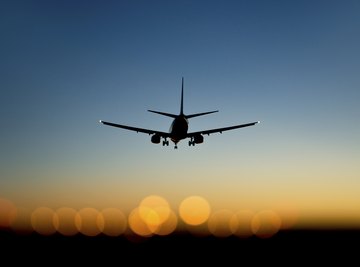

Noise is any disturbing or unwanted sound, and noise pollution affects people's health and quality of life. Cars, trains, airplanes and other forms of transportation are some of the worst offenders when it comes to noise pollution, but roadworks, gardening equipment and entertainment systems also play a role. Prolonged high levels of noise can cause hearing loss and stress-related illnesses. Noise often affects children more than adults, and noise pollution also affects general well-being.
Young Ears
Children are most vulnerable to hearing loss and other effects from noise pollution. Noise is measured in decibels, which state the intensity of the sound waves on a logarithmic scale. For example, 10 decibels is 10 times greater than 0 decibels and 20 decibels is 100 times greater. Damage to hearing occurs at noise levels higher than 80 decibels, which is the level of heavy truck traffic. Sound waves enter the ear and vibrations stimulate tiny hairs in fluid-filled ear canals, which transmit signals to the brain. Excessive noise destroys these delicate hairs. By the time hearing loss is noticeable, 30 to 40 percent of the hairs may have been destroyed.
Sick at Heart
Prolonged exposure to noise pollution increases the risk of heart disease. Constant background noise levels as loud as a garbage disposal unit, traffic noise from a major road and other noises higher than 60 decibels can cause cardiovascular effects, such as high blood pressure, faster pulse rates, elevated cholesterol, irregular heartrate and heart attacks. People living with noise pollution are more likely to take cardiovascular medication. A study carried out by L. Barregard of the University of Gothenburg and other scientists in 2009 found that men who lived near a major highway and busy train line for more than ten years were three times more likely to suffer from high blood pressure than men who hadn't been exposed to noise pollution.
Restless Nights
Sleep disturbance due to noise pollution affects people's health and mood. Poor sleep is bad for heart health, and causes tiredness, depressed moods and poor performance at many tasks, as well as reduced reaction times. When indoor noise levels are reduced, rapid eye movement (REM) sleep and deeper, slow wave sleep can increase. Greater levels of noise pollution increase in the number of night awakenings and changes between sleep stages. Although some people believe that effects of noise pollution at night decrease as people become used to the noise, this isn't the case when it comes to cardiovascular effects and increased body movement during sleep.
Noise in Mind
Noise pollution causes a range of psychological effects. In people vulnerable to mental illnesses, noise pollution can increase the development and symptoms of disorders. It can also contribute to nervousness, anxiety and neurosis, and emotional instability, moodiness and argumentativeness, causing social conflicts. Through interfering with spoken communication, noise pollution causes irritation, disturbed interpersonal relationships, misunderstanding, uncertainty, poor concentration, decreased working capacity and reduced self confidence. Studies on levels of the stress hormone cortisol in people exposed to noise pollution show raised levels compared to the general population and a reduced ability to regulate the hormone.
References
- The University of Texas School of Public Health: Environmental Noise and Non-Aural Health Effects -- A Research Summary
- U.S. Environmental Protection Agency: Noise Pollution
- Noise Off: Summary of Adverse Health Effects of Noise Pollution
- National Center for Biotechnology Information: Risk Of Hypertension From Exposure to Road Traffic Noise in a Population-Based Sample
About the Author
A graduate of Leeds University, Jenny Green completed Master of Arts in English literature in 1998 and has been writing about science since 2007. Green's work appears in Synonym, Sciencing, and other websites and ezines
Photo Credits
PinkBadger/iStock/Getty Images