

Should You Unplug Appliances During a Thunderstorm?

During a thunderstorm, the first instinct of many homeowners is to unplug electrical appliances to protect them. The common reasoning holds that a lightning strike could send a surge of electricity through household wiring, destroying electric devices and circuits.
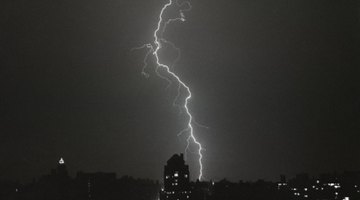
Some electrical appliances, such as refrigerators, cannot conveniently be unplugged. Other devices can; whether you need to unplug an appliance depends on several factors
Likelihood of Lightning Strikes
Lightning, as a massive discharge of static electricity, will take the path of least resistance in a given area where electrical charge has built up. Air is a poor conductor of electricity; therefore, cloud-to-ground lightning will seek the highest solid point to travel to the ground. Examples include trees, radio towers and other metal structures; metal is highly conductive. If your house has a large number of tall trees closely surrounding it, the odds of your house being struck by lightning are extremely slim.
Protection Against Lightning strikes
Two of the most common devices commonly thought to protect homes against lightning strikes are lightning rods and surge protectors. A lightning rod is a rod attached to the roof of a house with a wire trailing from the rod to a grounding post embedded in the earth. Its purpose is to divert lightning to the ground by providing it a clear path.
Surge protectors are devices that offer resistance against fluctuations in electrical power. They are intended to protect against fluctuations on the power grid, but a direct lightning strike carries much more current than a surge protector is designed to handle. Even if you have a surge protector, you should unplug devices.
Electronic Equipment
Not all appliances are created equal. Some appliances such as toasters, refrigerators and vacuum cleaners have few electronic components such as computer circuit boards. These circuit boards are extremely sensitive; even a spark of static electricity from a wool carpet can irreparably damage them. A direct lightning strike would completely destroy them. Devices with electronic circuitry, e.g. computers, televisions, and video game consoles, should be unplugged as first priority.
When to Unplug
Unplug electrical devices as soon as you notice the signs of an approaching thunderstorm: darkening sky, thunder, rising wind and/or visible lightning. Lightning strikes can occur several miles away from the actual center of a thunderstorm. If you want to gauge the proximity of a lightning strike, count the seconds between the lightning and the thunder and divide the number by five to determine the distance in miles. Leave devices unplugged until the storm has passed.
References
Writer Bio
Michael Smathers studies history at the University of West Georgia. He has written freelance online for three years, and has been a Demand Studios writer since April 2009. Michael has written content on health, fitness, the physical sciences and martial arts. He has also written product reviews and help articles for video games on BrightHub, and martial arts-related articles on Associated Content.
Photo Credits
- George Marks/Retrofile/Getty Images
- George Marks/Retrofile/Getty Images
More Articles

