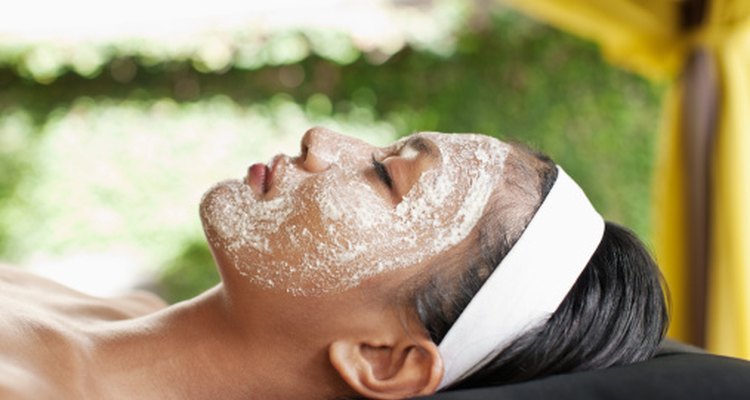
Aging skin tends to wrinkle and sag thanks in large part to the waning of the skin-firming fibers known as collagen and elastin. There's no shortage of creams, serums and moisturizers that promise to erase lines and tighten skin. Anti-aging creams can't give the results of a face lift. A few products however can penetrate the skin and effectively diminish the signs of aging, notes the American Academy of Dermatology.
Alpha-Lipoic Acid
Alpha-lipoic acid is a very powerful antioxidant that helps prevent skin damage while reversing past damage, according to the Cleveland Clinic. Alpha-liopic acid is able to reach all parts of the cell because it is both water and oil soluble.
Alpha-lipoc acid can help soften fine lines and give skin a youthful glow. It also enhances the antioxidants contained in other vitamins like vitamin C .
Vitamin C Creams
Anti-aging creams that contain vitamin C or ascorbic acid may promote collagen production, according to the University of Maryland Medical Center (UMMC). Topical vitamin C products may help improve skin firmness, diminish wrinkles and help soften the skin.
Hyaluronic Acid
Hyaluronic acid is sometimes found in ant-aging products that also contain vitamin C to help the product penetrate the skin, according to the Cleveland Clinic.
Hyaluronic acid is a naturally occurring substance that helps lubricate and cushion the skin and other tissues. As you age hyaluronic acid is gradually destroyed. Products that contain hyaluronic acid are generally used to soften wrinkles.
Copper Peptides
Copper peptides can help stimulate collagen, elastin and hyaluronic acid production, according to the Cleveland Clinic. Copper is a trace element contained in every cell. In topical products, it's mixed with tiny protein fragments known as peptides.
Copper peptides can help soften and tightening skin often in a more timely manner than other skin care products.
Tretinoin
Prescription-only tretinoin, brand name Retin-A, is a derivative of vitamin A. Tretinoin is the only topical treatment approved by the FDA to reverse sun damage or photoaging, according to the UMMC.
Tretinoin can stimulate collagen production and reduce skin roughness, wrinkles and age spots. It can take several months to notice the effects of tretinoin.
Hydroxy Acids
Alpha and beta hydroxy acids exfoliate the skin and clear away the upper layer of old, dead skin, according to the MayoClinic.com. Products that contain glycolic and salicylic acid can encourage the growth of smooth, evenly-colored skin.
Related Articles

Collagen & Rosacea

Can Age Spots Be Reversed?
Elastin Supplements

How to Find Somebody's Address

What Is Palmitoyl Oligopeptide?

Calories in One Slice Provolone Cheese

Amino Acids to Get Rid of Acne Scars & ...
Skin Care Products That Contain ...

What Foods Provide Calcium D-Glucarate?

Homeopathy Cure for Stretch Marks

Benefits of Shea Butter and Coconut Oil ...

What Effects Do Oranges Have on the ...
Instructions for Using Mandelic Acid
How to Reduce Acne Inflammation
Urea & Acne

How Many Calories Are in a Slice of ...
Anti-Aging Face Exercises
Benzoyl Peroxide-Free Acne Products

Does Retin-A Micro Gel Get Rid of ...

How to Repair Open Pores
References
Resources
Writer Bio
Karen Hellesvig-Gaskell is a broadcast journalist who began writing professionally in 1980. Her writing focuses on parenting and health, and has appeared in “Spirituality & Health Magazine" and “Essential Wellness.” Hellesvig-Gaskell has worked with autistic children at the Fraser School in Minneapolis and as a child care assistant for toddlers and preschoolers at the International School of Minnesota, Eden Prairie.
Photo Credits
Matthew Wakem/Digital Vision/Getty Images