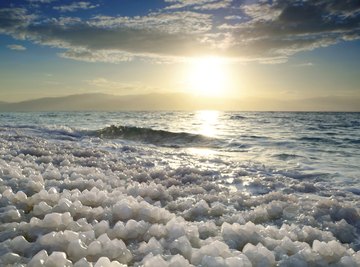
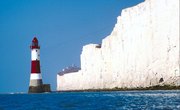
There are three rock types: igneous, sedimentary and metamorphic. Chemical sedimentary rocks are one of four specific types of sedimentary rocks, and they are also referred to as orthochemical sedimentary rocks. Formed as a result of the accumulation of precipitated minerals, chemical sedimentary rocks can occur due to organic or inorganic processes.
Examples of sedimentary rocks include limestone, dolostone, chert, travertine and coal. Often found in oceans, lakes, hot springs, caves and underground, chemical sedimentary rocks include some of the planet's most important sources of fuel.
Types of Sedimentary Rocks
There are four distinct kinds of sedimentary rocks: clastic, biochemical, organic and chemical. Clastic sedimentary rocks are also called detrital, and they form as a result of accumulation of rock fragments. Classified on the basis of particle size and texture, examples of clastic sedimentary rocks include mudstone, siltstone and sandstone.
Biochemical sedimentary rocks form when minerals precipitate as a result of organic processes. Examples include limestone and some types of chert. Organic sedimentary rocks are composed of dead plant material, such as coal that is formed over long periods of time in bogs.
Among many types of chemical sedimentary rocks, examples include evaporites, dolostone and iron formations. It's important to note that some geological words are not as specific as others; for example, some sources use the term "chemical sedimentary rocks" as a catch-all for rocks that were created as a result of inorganic, organic or biochemical sedimentary processes, while others distinguish these as three distinct types.
Regardless of the specific geological words used, all chemical sedimentary rocks are alike in that they consist of precipitated material that was once in solution. The precipitation of the material in chemical sedimentary rocks can occur as a result of either inorganic or organic processes.
Organic or Inorganic?
Organic processes refer to those that involve carbon and living organisms, while inorganic processes do not involve carbon or living organisms. Therefore, organic and biochemical sedimentary rocks are composed of material that was living at one time, while chemical sedimentary rocks do not involve living organisms.
To understand the difference, consider two types of limestone. Limestone is the most abundant sedimentary rock on the planet, and it can form either organically or inorganically. Biochemical limestones exist as coral reefs and chalk, which are both made up of the remains of marine organisms. On the other hand, travertine, an inorganic limestone, is formed when calcium carbonate precipitates from solution, like when calcium-rich water drips from the walls of caves and hot springs.
Evaporites like rock halite and rock gypsum are more examples of inorganic chemical sedimentary rocks, as they are formed without the influence of living organisms. Chert is another example of a chemical sedimentary rock that may form as a result of organic or inorganic processes. Composed of quartz, varieties of chert include flint, agate, jasper and petrified wood.
Where Sedimentary Rocks Form
In general, sedimentary rocks tend to form in three different types of environments: continental, marine and transitional. Continental environments may also be called terrestrial, and this term refers to non-marine environments. Terrestrial environments where sedimentary rocks form include lakes, rivers, alluvial fans, deserts and glacial outwashes.
Marine environments that support the formation of sedimentary rocks include beaches, reefs, continental shelfs and both shallow and deep waters. Transitional environments are the places where land meets sea, and they include barrier islands, tidal flats, deltas and lagoons.
Whether on land or in water, sedimentary rocks form as a result of the deposition of sediment, or small particles of material. Generally speaking, the transitional environments that favor sedimentary rocks are those where land meets calm water - conditions that allow for the accumulation of sediment.
References
About the Author
Meg Schader is a freelance writer and copyeditor. She holds a Bachelor of Science in agriculture from Cornell University and a Master of Professional Studies in environmental studies from SUNY College of Environmental Science and Forestry. Along with freelancing, she also runs a small farm with her family in Central New York.
Photo Credits
silverjohn/iStock/Getty Images