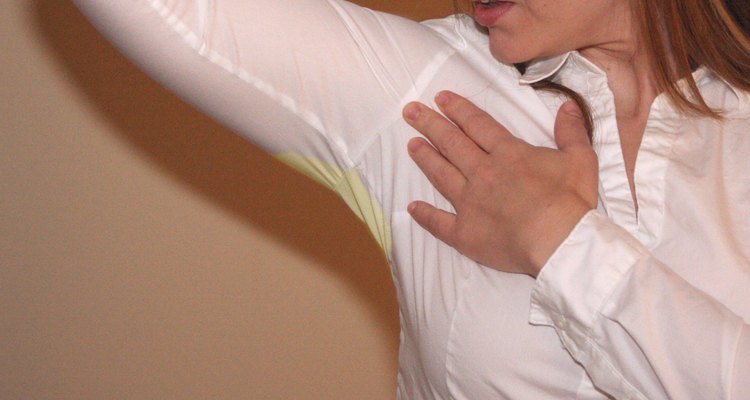
Yellowed armpit stains make a crisp white shirt look old and sloppy. Prevent further sweat stains on your white shirts or perk up garments that are already showing the telltale yellow underarm rings by adjusting your use of deodorant and using laundry pretreatments before washing your shirts. Oxygenating armpit stains before washing can help prevent permanent discoloration on white shirts.

Use a solid antiperspirant deodorant and apply only a thin layer to your skin before putting on your white shirt. The International Hyperhidrosis Society explains that armpit stains form as a chemical reaction between your deodorant and the fabric. Gel-type antiperspirants are more likely to leave stains.
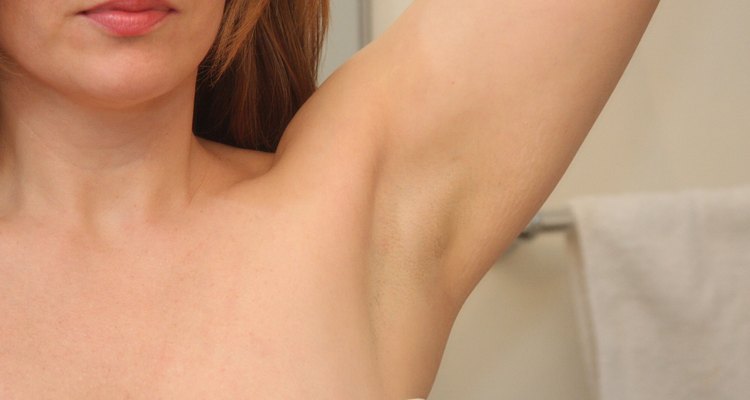
Allow your armpits to dry completely before getting dressed, to prevent some of the product from rubbing off onto your shirt. You'll notice the transfer of the deodorant more easily when you wear a colored top, but may not notice it when your shirt is white.
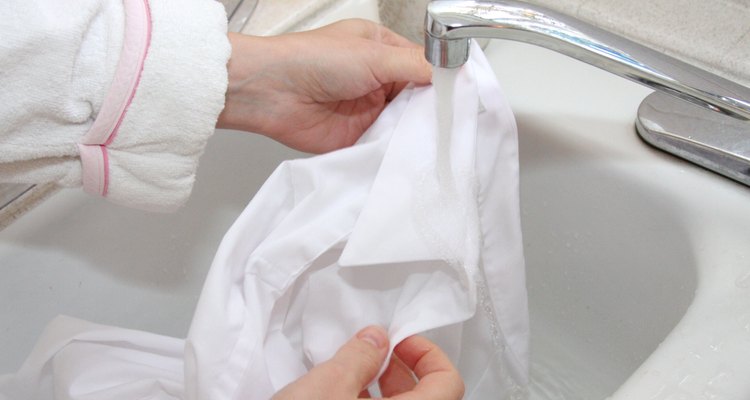
Rinse your white shirt in cold water before putting it in the washing machine. A prerinse in plain water removes any antiperspirant residue that might later cause a yellowish armpit stain to set during a normal washing cycle.
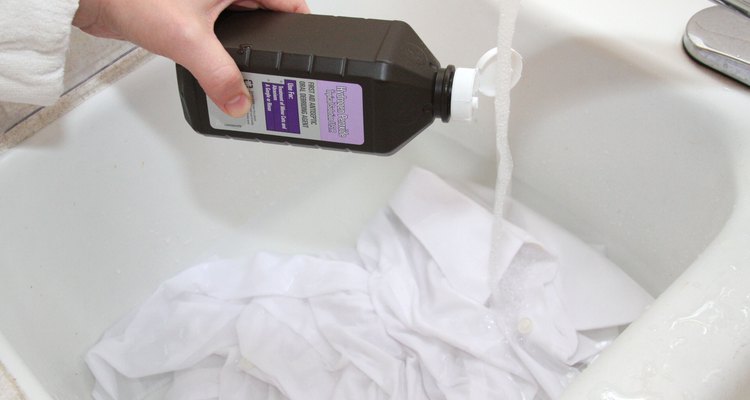
Soak your white shirt in a mixture of equal parts cool water and hydrogen peroxide to prevent underarm staining. After about 30 minutes, rinse the shirt again in cold water and wash as normal.
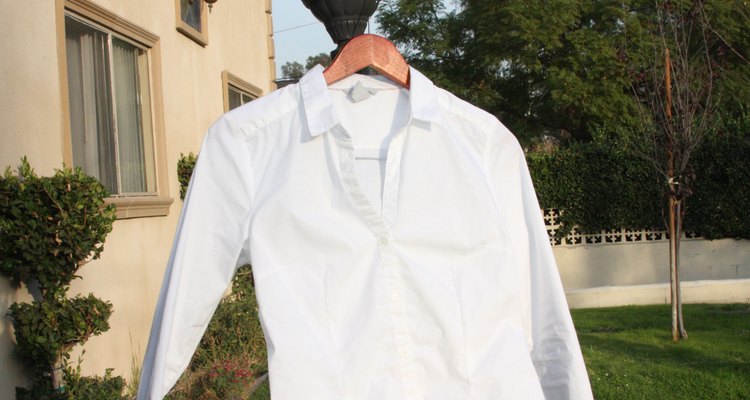
Hang dry your white shirt, either outside in the sun -- a natural bleaching agent -- or inside. The heat of the dryer will set any stains that might remain. When the shirt is dry, you can assess whether you have prevented permanent staining. If armpit stains have remained, soak the shirt again in hydrogen peroxide and water, increasing the peroxide to a bit more than half.
Related Articles

How to Keep Your Shirts From Getting ...

How to Remove Color From White Clothes ...
How to Remove Body Odor Smell From a ...

How to Clean Cotton-Polyester Blend ...

How to Wash a Tuxedo Shirt

How to Wash a Dress Shirt

How to Remove Sweat & Deodorant Stains ...

How to Get Rid of Yellow Age Spots on ...

How to Shrink Cotton Shirts

How to Bleach a Black Shirt Gray

How to Bleach Mens' Dress Shirts

How to Eliminate Dry Cleaning Odors

How to Get Rid of Yellow Stains on ...

How to Turn Pink Clothes White Again
How to Remove Blue Jean Dye Stains from ...
How to Wash Cotton Fabric
How to Prevent Cotton Shirts From ...

How to Take Care of 100% Cotton ...

How to Remove Tough Stains From Collars ...

How to Wash Cotton Clothes
References
Writer Bio
Erica Roth has been a writer since 2007. She is a member of the Society of Professional Journalists and was a college reference librarian for eight years. Roth earned a Bachelor of Arts in French literature from Brandeis University and Master of Library Science from Simmons College Graduate School of Library and Information Science. Her articles appear on various websites.
Photo Credits
Tim Oliver/Demand Media