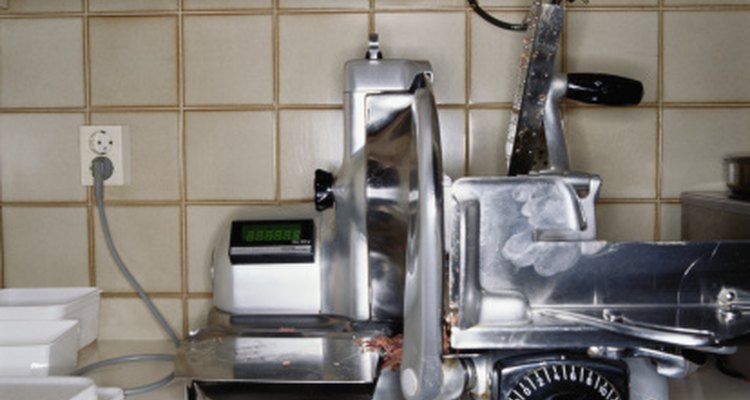
If your meat slicer is mangling and tearing the meat as you slice it, it's time to sharpen the blade. When professional or commercial meat slicer blades become dull, they quit cutting uniformly; slice thickness varies and the meat begins to shred as you cut it. How you sharpen your meat slicer blade depends on the type of slicer you have. Some include a basic built-in sharpener attachment, while others feature an integrated knife and sharpening stones that sharpen as the blade works. Meat slicers with an integrated knife do not typically require additional sharpening.
Turn off and unplug the meat slicer.
Remove the blade cover. Clean the blade with a soft cloth, a mild detergent, such as dishwashing liquid, and water. Do not submerge the machine in water. Dry the blade with a fresh cloth.
Apply cooking oil or sharpening oil to the surface of the blade.
Adjust the slicer blade against the sharpener per the manufacturer's instructions. The surface of the sharpening stone should sit close to the edge of the blade when positioned correctly. Some blade adjustment typically is needed to sharpen the edge of the blade on slicers with built-in sharpeners and those without built-in sharpeners.
Plug in the machine and turn the power on. Let the blade sharpen for a minute or two. Turn off the machine and check the sharpness of the blade. If the blade still appears dull, repeat the process until the blade appears sharp.
Put the sharpener away, and move everything on the machine back to its original position per the manufacturer's instructions. Clean the blade again before using it.
Related Articles
What Type of Knife to Carve Prime Rib?

How to Use the Norelco Jet Clean System
How to Grill a Ribeye on a Weber Q
How to Adjust Andis Clipper Blades
How to Get Rid of a Musty Smell in an ...

How to Clean Blades of Oster Clippers
How to Remove the Blade on a Schick ...

How to Cook Tender Rolled Flank Steaks ...

How to Cook Cowboy Cut Ribeye
How to Sharpen Nail Nippers

Proper Sanitizing of Electric Razors

How to Cook Nurse Shark Meat
How to Replace the Battery in a ...

How to Cook the Neck of a Deer

Shank Ham Cooking Directions
How to Marinate Meat With a FoodSaver

How to Delint a Sweater

How to Sharpen Norelco Electric Razor ...

How to Cook Marinated Pork Loin From a ...

How to Cook Chicken Breasts in a ...
References
Writer Bio
Sienna Condy began writing professionally in 2001 while attending the University of Cincinnati, and she's been at it ever since. Since graduating, she's written everything from marketing materials to articles on removing stains. Today, she enjoys writing about weddings, legal issues, science, health and parenting.
Photo Credits
Ryan McVay/Photodisc/Getty Images