
Volcano Formation
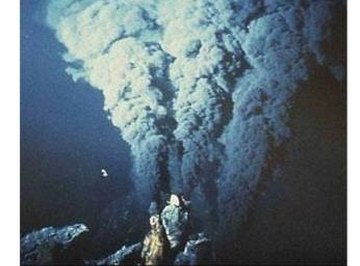
Underwater volcanoes form much like volcanoes on dry land, by a process known as subduction. This occurs as a result of the tectonic plates which form the top layer of the earth's mantle, just below the earth's crust. They support the weight of the continents and the combined water of the seas. This is not a completely solid layer though; they are broken up and float atop a layer of molten rock under intense pressure. The tectonic plates are on constant drift atop this layer of rock, occasionally two plates will pull just far enough apart for the molten rock to pass through and worm its way to the surface. Underwater however, this occurs a bit differently. Without the presence of the tectonic plates to support the ocean floor, the floor caves in under the weight of the sea, creating a trench and bringing millions of gallons of seawater with it. From the trench arises a growing mound of rock, which continuously spews up from beneath the tectonic plates. The molten rock quickly cools upon contact with the chill seawater, forming a traditional volcano one brings to mind.
Catalyst
For a volcano to erupt there must be a catalyst to instigate the occurrence. Without said catalyst the molten rock will continuously form up until such time as the tectonic plate shifts against, cutting off the flow of magma from the earth's mantle. This is most likely to occur in climes of the world where sudden ocean temperature changes can occur, such as near the equator. What can happen is that a sudden decrease in temperature will speed the cooling of fresh magma before it can clear the vent at the top of the volcano, plugging it.
Volcano Eruption
More and more magma builds up from the inside of the plug. A minor eruption can occur in which the pressure grows to sufficient levels to blast through the rock blockage. This happens all the time without anybody's notice. Another possibility is that the magma within the top of the vent behind the blockage begins to cool as well, adding to the blockage. This may continue over a period of months or even years until such time as the pressure either breaks through the side of the volcano, forming a new secondary vent into which the magma passes, or it can blast the entire top of the volcano clean off, much like what happened with Mount Saint Helen's in Washington. This throws magma up high from the ocean's depths in such amount as to flash boil millions of gallons of water in minutes. This creates a huge roiling cauldron of water which rises to the surface of the ocean in the form of froth and furious bubbles stinking of sulfur. Any plant or sea life caught within the radius of this cloud of boiling water is killed quickly, adding to the mystique of the deeps as all sorts of dead things rise to the ocean surface to mystify the land dwellers.
About the Author
John Albers has been a freelance writer since 2007. He's successfully published articles in the "American Psychological Association Journal" and online at Garden Guides, Title Goes Here, Mindflights Magazine and many others. He's currently expanding into creative writing and quickly gaining ground. John holds dual Bachelor of Arts degrees from the University of Central Florida in English literature and psychology.
Photo Credits
www.greatdreams.com