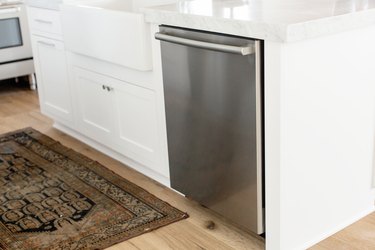
You pop your dishes in the dishwasher, turn it on and spend the next two hours binge watching television. Two hours later, you make your way back in order to pour yourself a glass of wine into a now sparkling clean wine glass. But when you open your dishwasher, you discover that the job has been done only half way. The dishes are clean but are not dry enough. Grudgingly, you reach for a dish towel because you don't want to drink your wine mixed with warm rinsing water.
Drying Is Harder Than Cleaning
Video of the Day
Well, guess what: For your dishwasher, unlike for yourself, drying the dishes is actually harder than washing them. According to an expert interviewed by Consumer Reports in January 2018, your dishwasher may find drying difficult because your plates and cups trap water, which makes it hard to dry the dishes completely. In addition, plastic is more difficult to dry than glass or ceramic dishes. That's because the latter two have better heat retention properties, which greatly assists the drying process.
Video of the Day
Most dishwashers use one or several of the following methods to get your dishes dry: Heated air, heated rinse, fan or air dry.
Heated Air
Some dishwashers have a heating element at the base that heats the air to help dry the dishes faster. This is particularly common with older models, and is quickly becoming outdated with newer ones as manufacturers now strive to build more energy-efficient appliances.
Heated Rinse
The more common drying method with modern dishwashers is to increase the water temperature towards the end of the cycle to rinse the dishes with very hot water. After the rinsing is over, the stainless-steel interior of the dishwasher attracts the heat, pulling moisture away from the dishes. This is called the condensation drying method. This works well on glass and ceramic dishes but doesn't work as well on plastic.
Fan
Some dishwashers use a fan that circulates the air to help dry the dishes. Like heated rinse, this option is more energy-efficient because the air does not need to be heated.
Air Dry
The air dry option is exactly what it sounds like. Some of the latest models make your dishwasher door automatically open in the last few minutes to allow the hot air and humidity to escape.
Help Your Dishwasher
There are a few ways you could help your dishwasher do its drying job better. First, you can use a rinse aid to help the drying process. What it does is make the water roll off your dishes instead of form droplets on them. Second, if your dishwasher does have a heating element, it typically has the option for you to manually turn the heated dry on. Now, go ahead and drink your wine from a perfectly dry wine glass without reaching for that far away kitchen towel.