Your Guide to Holiday Etiquette

The Ins and Outs of a Formal Thanksgiving Dinner

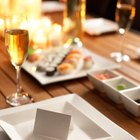
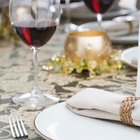
Thanksgiving can be an elaborate affair with proper etiquette to match.(photo: Ryan McVay/Photodisc/Getty Images)

If you make a mistake in which utensil you chose, then put that utensil down and begin again. No one will notice, especially if at a large table, unless you make a big deal of it.

— Sally Hartley, etiquette speaker, interior designer and owner of Observation & Instinct in Scottsdale, Arizona

Few meals demand as much attention and accoutrements as Thanksgiving dinner. For many, it’s an excuse to break out the fancy dishes, shiny flatware and tabletop embellishments to create a formal five-star dining experience with family or friends in the comfort of home.

But it can be a little overwhelming for hosts and guests who may not be accustomed to the barrage of dinnerware. It also calls for more sophisticated table etiquette that is not often practiced in modern life.

That elegant set of china passed down through generations, the wedding gift of crystal glasses and the pricey sterling flatware are meant for memorable occasions. Whether you are a host or a guest for the big holiday meal, the best way to approach the gathering is to be prepared.

What Goes Where

A dinner plate with soup bowl on top exudes a formal touch. (photo: Comstock Images/Comstock/Getty Images)

If you want to take your Thanksgiving table to an ultra-formal level, place your charger or dinner plate in the center of each place setting, with the soup bowl on top of the plate if soup will be served, advised Sally Hartley, etiquette speaker, interior designer and owner of Observation & Instinct in Scottsdale, Arizona.

To the left of the plate and starting from the outside working inward, place the salad, dinner and dessert forks. It's also OK to leave out the dessert forks and just bring them in before you serve that course -- or, as another alternative, place the dessert utensils horizontally above the main plate. On the right side, also starting from the outside moving inward, place the soup spoon, teaspoon and dinner knife, with the blade facing the plate. The bottom edges of the silverware should line up for a clean look.

The bread plate sits to the upper left of your main plate with the butter spreader laid diagonally. The blade should once again face toward the plate and the handle should be on the right. Beverage ware goes to the upper right corner, above the knife, with the wine glass to the right of the water goblet. A cloth napkin may be placed to the left of your salad fork or across your dinner plate if you are not serving soup.

The key to setting a formal dining table is to make sure every piece is placed geometrically, according to the Emily Post Institute. Centerpieces should sit in the exact center of the table and place settings should be equal distances from each other. Hartley said you can add or take away utensils depending on the number of courses or types of food you serve. In the end, aim for no more than three utensils on either side. If you need more than that, she said, you can bring pieces in before each course.

Dinner Is Served

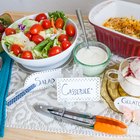
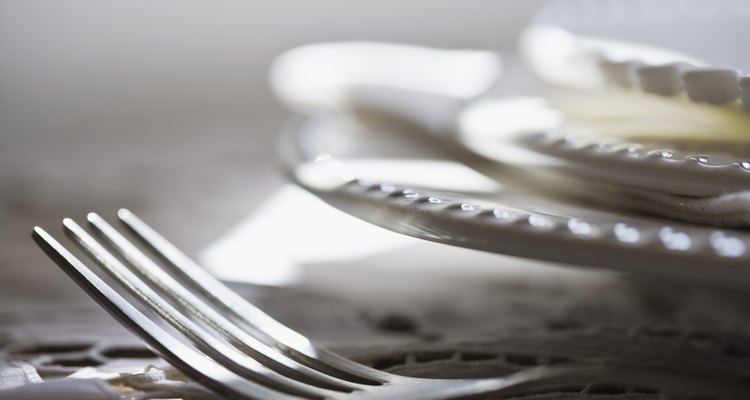
If you're confused on which utensil to use, work from the outside in. (photo: Comstock/Comstock/Getty Images)

Once you are seated and have everything in front of you, how do you remember which instrument belongs to you and not your neighbor?

One method the institute suggests is to imagine the word “forks” as you look at your setting from left to right: “F” stands for fork, “O” represents the shape of the plate, “K” is for knives and “S” is for spoons. “R” is absent, of course, but following the basic concept helps keep you from accidentally sipping from the wrong water glass.

Another trick to track which pieces are yours: Make a lowercase “b” with your left hand and a lowercase “d” with your right by touching your thumb tips to the tips of your forefingers. The letters remind you that bread and butter go to the left of the place setting and drinks go on the right.

Car aficionados may prefer to follow Hartley’s device of using “BMW” – which stands for “bread,” “meal” and “water” – as you move from left to right while facing your place setting. If salad will be served with the meal and not before the main course, the salad plate will be on the lower left side of your plate to the left of your forks. On the right of your plate will be your remaining silverware, your drinking glasses and perhaps a coffee cup and saucer.

Deciphering when to use what silverware doesn’t have to be complicated either. A formal place setting features utensils in order of use, with the diner using one piece for each course starting from the outer tool and working inward. In most formal settings, you will start with a soup spoon or salad fork and end with a dessert fork.

Hartley advised nervous diners to practice at home or keep an eye on what the hosts do and follow suit. Courtesy dictates that you wait to begin eating until after everyone at the table has been served. When in doubt, take a quick look around to see what others do.

“If you make a mistake in which utensil you chose, then put that utensil down and begin again. No one will notice, especially if at a large table, unless you make a big deal of it,” Hartley said.

As soon as you are seated, place your napkin in your lap. If you leave the table, place it on your seat if you plan to return. If not, neatly fold it and put it on the table at the left of your plate, Hartley advised.

The Emily Post Institute says food should pass to the right or clockwise to maintain order while guests fill their plates. Gravy boats or similar serving dishes with a handle should be passed to the next person with the handle facing away from you, allowing someone to grab hold easily.

The best way to deal with an olive pit or an unexpected bone or piece of gristle, Hartley said, is to lift your napkin up to your mouth to conceal it, use your other hand to remove the item and discreetly place it on the side of your dinner plate.

When you are finished eating, there’s no need to push your plate away. Just leave the knife and fork across your plate, with the tines at 10 o’clock and handles at 4 o’clock to let your host know you are done with your meal.

Modern Manners

Table manners extends to the children and the adults in the party. (photo: BananaStock/BananaStock/Getty Images)

If you have a son or daughter who has outgrown the kids’ table and is ready to sit with the adults, take off some of the pressure by eliminating several of the utensils and pieces of glassware that grace the area where your child will sit. Stick with a fork, knife, spoon, plate, beverage glass and napkin, Hartley suggested.

“It is less confusing for them and offers less temptation to play with all the extra utensils,” she said.

If a child finishes eating first and asks to be excused, let him go to avoid any fidgeting and fussing while you enjoy the rest of your meal. He can always return to the table when dessert is served.

Occasionally, adults need a refresher in manners as well. It’s rude and insulting to your hosts to text, check your Twitter feed and Facebook page or email at the table. Turn off your cell phone unless you are expecting an emergency call. In that case, advise your host ahead of time that you may need to excuse yourself for an urgent call, Hartley suggested.

Resist the urge to powder your nose or touch up your lip gloss at the table. And definitely don’t reach into your pocket for a toothpick to remove that piece of spinach between your teeth. If you feel the need for some light grooming, excuse yourself and take care of it in the powder room.

Keeping the Holiday Happy

If a newcomer or guest looks lonely or appears to have been left out of conversations, make an effort to connect with her so she feels welcome. Try to open up discussions so that everyone at the table is engaged. Nothing is worse than sitting and eating alone between two people who are turned away from you as they talk to someone else, Hartley said.

Although it makes sense to steer away from controversial topics such as politics, religion or any subject that could raise tension among guests, the chances that these topics will come up could increase after a couple of hours of food and a few glasses of wine.

If you sense the conversation taking a negative turn, try to head it off by reminding everyone of how special it is that you are together -- and then start a new topic. If that doesn’t work and tempers flare, ask those involved to leave the table to hash it out in private or to wait until after the meal.

“It is the job of the host and hostess to assure that all the guests are comfortable and feel welcome,” Hartley said. “The other guests will thank you for this request.”

  • Photo Credit Ryan McVay/Photodisc/Getty Images Comstock Images/Comstock/Getty Images Comstock/Comstock/Getty Images BananaStock/BananaStock/Getty Images

Read Next:

Comments

Follow eHow

Related Ads

Featured