

How to Winterize Home Baseboard Heating

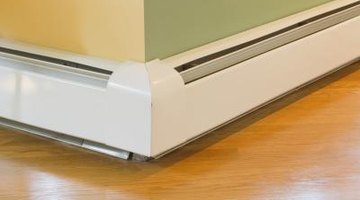
Before closing up a summer home for the season a hot water baseboard heating system must be emptied to prepare for cold weather. Any water left in the pipes will freeze during the winter and burst, causing immensely expensive damage to the home in question. It is entirely possible to winterize a home on your own, but if you have any doubts about your capability to do it to perfection, do not hesitate to call a plumber. The money you spend before winter could save you a lot of money in repairs after winter.
Step 1
Turn off the power source to your heating system. If you heat with gas, close the gas valve and turn off the pilot before emptying the water heater. Failure to turn off the power source could cause the heating system to activate on an empty tank. Inspectapedia.com explains that heating an empty tank is the best way to permanently damage it.
Step 2
Locate the drain valve at the bottom of the water heater. Attach a garden hose to the hose attachment on the drain valve. Over 40 gallons of water can be stored in the tank; it is prudent to reroute the water outside or to a drain.
Step 3
Open the valve, once the hose is attached, and drain the tank.
Step 4
Drain the expansion tank, located above the furnace, suspended from the ceiling.
Step 5
Open the baseboard vents on the top floor of the house after the tank is drained. Open the vents on the lower floors as the water level drops.
Step 6
Inject compressed air into the heating pipes if you suspect that there is any water that refuses to drain. Any water left in the pipes could cause them to burst.
References
Writer Bio
Based in Fort Collins, Colo., Dannah Swift has been writing since 2009. She writes about green living, careers and the home garden. Her writing has appeared on various websites. She holds a Master of Arts in English literature from the University of New Hampshire and is currently pursuing a certificate in paralegal studies.
Photo Credits
- Thinkstock Images/Comstock/Getty Images
More Articles

