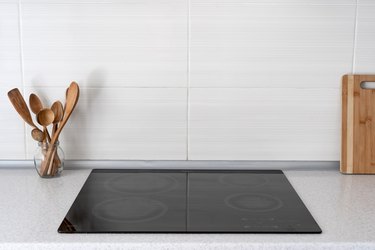
Did you hear about the guy who bought a fab new stove only to discover he couldn't use his expensive copper cookware with it? That's the story most people hear about induction cooktops. Such stories mean people lump all glass cooktop stoves in the same category, even dismissing them when choosing a stove for their kitchen. But that's unfortunate since these modern innovations are making big believers of chefs around the world.
Induction: Not Cooking With Gas
Video of the Day
Until recently, chefs only wanted gas stoves for speed and utility, but times have changed. Gas is still best for cooks who live and die by their wok, but it's a hot debate for everyone else. The reality is, these stove tops make a mockery of the old electric burners you'd turn on three minutes before bothering to get a pot out since it'd take that long to heat. Without getting too sciencey, glass-topped induction stoves work via electromagnets that heat the actual pot up rather than creating heat against the pot for heat to transfer into it.
Video of the Day
It sounds strange that the pot heats up rather than the surface of the stove, but Consumer Reports says it's faster than any other cooking technology; it boiled their 6-quart pot of water up to four minutes faster than any other tech. In using the same water-boiling test, Reviewed.com found it took the best gas range they tested nearly nine minutes to boil 6 quarts, but induction made it happen in three minutes and seven seconds — 65 percent faster!
Induction cooking happens through an electromagnetic field. It needs an induction-rated pot on the burner for it to heat. In fact, if induction stove tops get hot, it's because of reverse heat transfer from the cooking pot back to the glass top, like a hot pot set on a counter transfers heat to the counter. Cheese on the glass top next to cooking pot won't even melt.
Infrared Cooktop: Basics
Most hotplates these days are made with infrared technology, and many ceramic-topped stoves are infrared too. It's fast, uses less energy and doesn't require specific cookware to activate it. While an induction stove may not look like it's even on, infrared stoves will glow bright red because they're made with halogen lamps and radiant coils that combine to transfer heat to your cooking pot through direct infrared radiation.
The surface does heat up, and fast, but the ceramic stove top is specifically designed to not be as conducive for heat because of how efficient the infrared is. Cooking-wise, they offer similar results as induction.
Perks of Induction and Infrared
Induction stove top users may find digital meat thermometers don't work since the magnetic field from the stove can disrupt its processes, so an old-school analog thermometer is handy. On the upside, it's a great stove top for parents with kids, because if there's no induction-type pot on the stove when Junior pushes the buttons to turn it on, it won't heat at all. And if you live in a hot climate, induction generates far less ambient heat when you're cooking a feast on hot days.
Infrared is incredibly effective, using technology similar to how microwaves work since it cooks with radiation and vibrates the molecules inside the food. Sometimes this can mean food retains more moisture than if cooked with other methods using convection heat, and it's why people like infrared grills. There are concerns from some consumers about the dangers of radiation, much like the worries held by people in the early days of microwave cookery, but these fears are unfounded.