

Bridge Demolition Methods

Bridge demolition, like all demolition projects, requires careful planning and the use of proven and uniform methods and procedures. The type of bridge to be demolished and circumstances surrounding it determine the type of demolition process to be utilized.
Explosives
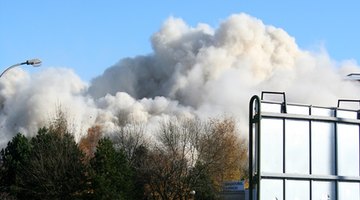
One of the most common methods of bridge demolition is to use explosives. Explosives are particularly effective in taking down large amounts of concrete, usually placed in boreholes that are drilled into the concrete at strategic points. The advantage of explosives is their adaptability and flexibility in getting the job done. However, when using explosives, it is important to observe extreme safety measures and to be aware of surrounding structures that might be damaged by air blast and vibrations created in the explosion.
Bursting
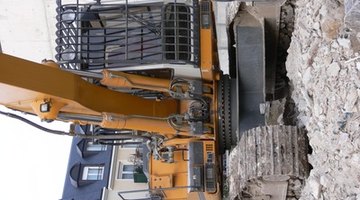
Three types of bursting technology have been proven effective in taking down concrete bridges. These including pressure, chemical and mechanical bursting. Pressure bursting – applying force on the concrete until it splits or breaks – is affective in situations where it is import to contain dust, maintain relative quiet and have considerable control over the demolition process. Chemical bursting is a matter of drilling a series of specifically designed boreholes and injecting slurry that over several hours splits and breaks the concrete. It is a more expensive method and needs to be used in warm weather; however, it is quiet and can break concrete in controlled patterns. Similarly, mechanical bursting relies on hydraulic pressure. It is relatively inexpensive and quieter, although it is sometimes difficult to control the cracking patterns.
Hydraulic Breakers
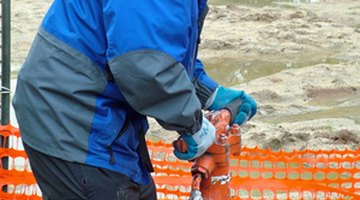
Hydraulic or pneumatic breakers are often used in bridge demolition. For many demolition specialists, boom-mounted breakers or hand-held breakers – jackhammers – are preferred. A machine-mounted breaker can hammer out between 300 and 800 strikes per minute. Many of the machine-mounted models are remote-controlled, use a boom for maneuverability and reach, and can be adapted for underwater use, especially important when taking down bridge abutments. They do, however, produce noise, vibrations and dust. The hand-held breakers or jackhammers, too, can generate considerable noise and dust.
Dismantling
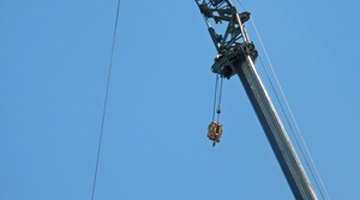
In some circumstances, bridges can be removed simply by cutting them into sections and removing them by crane. This method can be done relatively quickly and without generating dust, vibrations or noise, or creating problems for surrounding buildings. There are three primary methods in the dismantling process. First and probably most common is sawing. A second method is water-jetting, which can cut straight or curved lines and eliminates fire hazards and dust. However, it does necessitate the use of an abrasive substance and a system to catch water during the cutting process. The third method deploys a thermic lance that slices the concrete and rebar. It generates considerable heat and can cause excessive smoke and is potentially a fire hazard.
Writer Bio
Douglas Hawk has been freelance writing since 1983. He has had articles appear in numerous Colorado newspapers and in a wide variety of national magazines. Hawk has sold three novels and one short story, which won an award from the Colorado Authors' League. He holds a Bachelor of Arts from Adams State College and master's degree in mass communications from the University of Denver.
Photo Credits
- bridge image by Svetlana Nikonova from Fotolia.com
- bridge image by Svetlana Nikonova from Fotolia.com
- explosion image by Vely from Fotolia.com
- travaux image by silonos from Fotolia.com
- jack hammer, man working image by Greg Pickens from Fotolia.com
- crane boom image by pearlguy from Fotolia.com
More Articles

