

Extracting water from ink, milk, and vinegar is not as difficult is it may seem. All three liquids are water-based, provided you use water-based ink. They each have different boiling and freezing points from water. This means water could be extracted through the process of distillation. Both ink and milk can be easily separated through the process of steam distillation. However, for vinegar, it may be best to use the freeze distillation method because of the acidity.
Steam Distillation

Pour either the ink, milk or vinegar into a distillation flask, and use the clamp stand to hold it above the Bunsen burner.
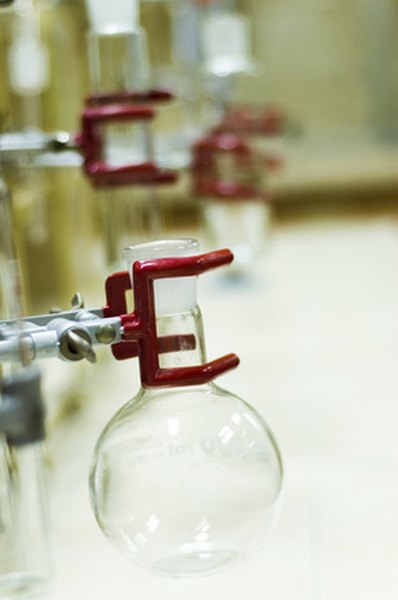
Seal the top of the distillation flask to prevent any steam from escaping there. Use a thermometer seal instead of a normal one if you have it available; this way you can determine the boiling point of the liquid. At sea level, water normally boils at 212 degrees Fahrenheit, which is 100 degrees Celsius.
Attach one end of the condenser to the distillation flask, and use a clamp stand to keep it in place. The purpose of the condenser is to cool the vapors as they come out of the flask. That way they can be recondensed back to a liquid form.
Extend the free side of the condenser tube over to the receiver flask, and position the flask under the open end of the condenser. This way the flask can be used to catch the water as it drips out of the condenser.
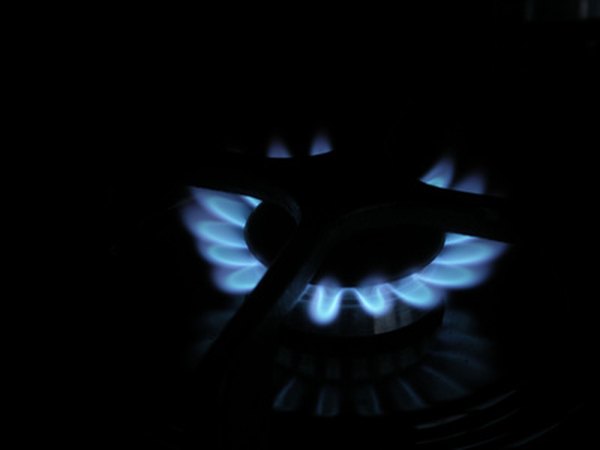
Extend the burner hose to the gas outlet, and connect it. Make sure the gas outlet handle is in a completely closed position. The handle should be at a 90-degree angle from the outlet pipe.
Turn the stovetop on, or light the Bunsen burner by turning the gas valve on the gas outlet to the fully open position. Open the gas adjustment at the base of the burner until there is a good gas flow through the burner. Light the Bunsen burner with a sparker or match. If you are using a match, hold it toward one side near the mouth of the burner. Don't try to stick the match into the middle of the gas flow, because it will be blown out.
Adjust the flame with the bottom gas adjuster. As you turn the wheel, it will change the way the flame looks. Adjust the wheel until the flame has a pale blue outer flame surrounding a bright blue cone-shaped core.
Put the flame under the flask containing the milk, ink, or vinegar until the liquid reaches its boiling point. The water from the liquid will transform to vapor, then it will travel through the condenser, where it will recondense and form water droplets that will slowly drip into the receiver flask. Do not allow the liquid to boil to rapidly. It is potentially dangerous, because the lid could blow off the distillation flask, putting you at risk of burns.
Freeze Distillation
- Distillation flask
- Clamp stands
- Bunsen burner or stove
- Condenser
- Receiver flask
- Matches
- Clear, narrow-mouthed container
- Widemouthed container
Always wear goggles when you are performing a chemistry experiment.
Use caution with an open flame. You can get burnt or start a fire more easily than you would imagine.
When using a Bunsen burner, refrain from wearing clothing that hangs or is to loose. Avoid wearing items that could fall off while working with a flame.
The hottest part of the Bunsen burner flame is the tip of the inner blue, cone-shaped core.
When freeze distilling, don’t apply heat to the experiment. It will muddle the results.
It is against the law to distill alcohol without a federal permit. The distillation of alcohol is only permitted for those using the method for fueling purposes.
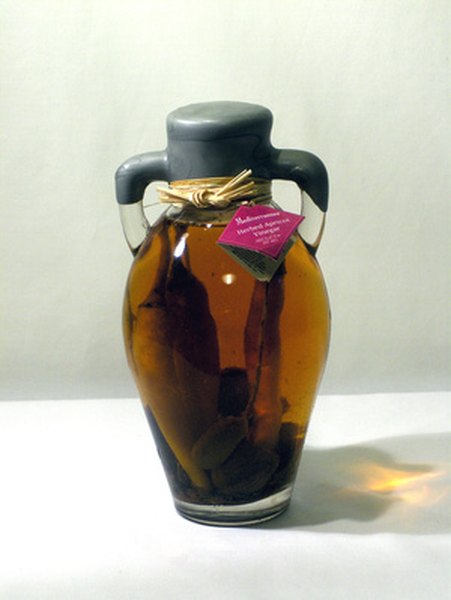
Pour either the milk, ink, or vinegar into a narrow-mouthed container, such as a water bottle or milk jug. Leave some room near the top for expansion.
Put the container into the freezer. Water freezes when it goes below the temperature of 32 degrees Fahrenheit or 0 degrees Celsius. Be sure the freezer thermostat is set below that temperature.
Take the container out of the freezer after it has been there for at least 24 hours.
Place the container upside down in a bowl. The water will stay inside the jug, and the solvent will drain out into the bowl. Depending on what the solvent is, and what its freezing point is, this may happen right away or slowly.
Discard the undesired element, either the solvent or the water, when the ice inside the container is completely clear. That is a good indication that the process has completed.
Things You'll Need
Warnings
References
Warnings
- Always wear goggles when you are performing a chemistry experiment.
- Use caution with an open flame. You can get burnt or start a fire more easily than you would imagine.
- When using a Bunsen burner, refrain from wearing clothing that hangs or is to loose. Avoid wearing items that could fall off while working with a flame.
- The hottest part of the Bunsen burner flame is the tip of the inner blue, cone-shaped core.
- When freeze distilling, don't apply heat to the experiment. It will muddle the results.
- It is against the law to distill alcohol without a federal permit. The distillation of alcohol is only permitted for those using the method for fueling purposes.
About the Author
Cape Cod-based Nicole Coe has been writing online since 2006. Her articles have been published on various websites. Coe earned an associate degree in language arts from Cape Cod Community College, in Hyannis, Massachusetts. She earned her Bachelor of Arts in English and communications online at Ashford University.
Photo Credits
science image by peter Hires Images from Fotolia.com