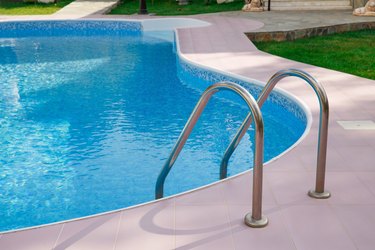
Shocking a swimming pool is the process of adding a large dose of chlorine to the water, killing bacteria and bringing the pool's free chlorine levels up into the desired range. Shocking a pool also kills any algae that may be growing in it. The shocking process itself is simple, but you need to know when and why to shock your pool, as well as how.
When to Shock
Video of the Day
There are two types of chlorine in your swimming pool. The first is free chlorine. Free chlorine is essentially the fresh chlorine that has not yet absorbed bacteria and other pool contaminants. This chlorine is free, or available, to disinfect the pool. Pools also contain chloramines, which are often referred to as combined chlorine. Chloramines are chlorine particles that have already reacted with bacteria in the pool and are now used up. Chloramines do not provide any benefit for the pool, and can irritate a swimmer's skin and eyes. Chloramines are also responsible for the pool smell that most people mistakenly believe to be chlorine. It's time to shock your pool when the chloramine level rises above 0.5 or the free chlorine level reaches zero. Shock your pool if you notice algae growth, as well.
Video of the Day
Why Shock

Just as important as knowing when to shock your pool is knowing why. Increases in your pool's chloramine levels always happen for a reason. Knowing what causes chloramine spikes will help you recognize when the pool is most likely to require water testing and a little attention. Chloramine levels will spike in your pool after a period of heavy use. The more swimmers present in the pool, the more chlorine will be used to kill bacteria. Chloramine spikes are also common after periods of heavy rain and water changes. Stinging eyes and a smelly pool both indicate high levels of chloramine and let you know that it may be time for shock. It's also important to remember that you may not use your pool in the winter, but bacteria do. To keep your pool as clean as possible, shock it when opening and closing it for the season.
How to Shock
Step 1
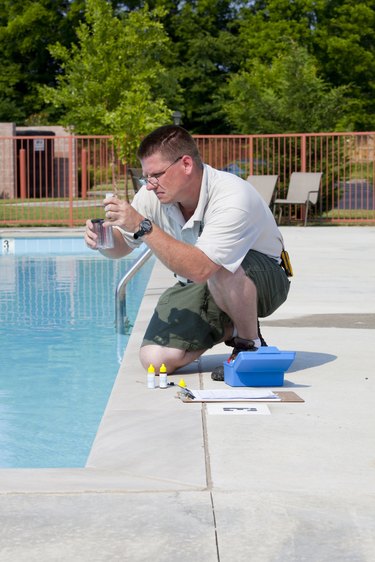
Check your pool's pH level. The pH level in your pool should between 7.2 and 7.4 when you're shocking. Adjust your chlorine levels before shocking, if necessary. Check your chloramine and free chlorine levels as well, to determine if shocking the pool is truly necessary.
Step 2
Thoroughly vacuum your pool to remove any debris. Fallen leaves, dead insects and other dirt all harbor the bacteria you want to get rid of.
Step 3
Wait until evening to shock your pool. Bright sunlight dissolves chlorine quickly and may make shocking less effective. Shocking at night eliminates this problem
Step 4
Fill a bucket with water and then add the chlorine shock to the water. Never add water to chlorine, as this may cause splashing. You'll need 2 pounds of pool shock for every 10,000 gallons of water in your pool.
Step 5
Pour the pool shock into the deep end of the pool, distributing it as evenly as possible. Once you've added the shock, turn on your pool pump and let it run for at least six to eight hours. Give the pool another quick brushing while the filter is running too.
Step 6
Test your pool water in the morning. It is safe to resume swimming when your pool's free chlorine levels have returned to between 3 and 4 ppm. This typically takes eight to 12 hours after shocking. If you shocked your pool overnight, you should be able to swim by morning.