

"Lumens" is a measure of how much light a lamp produces in all directions. "Candlepower" is the intensity of light at the center of a spotlight beam when measured in one direction. Thus, strictly speaking, you cannot directly convert lumens to candlepower. However, if a lamp or flashlight is rated by a manufacturer in terms of candlepower, it actually means "mean spherical candlepower." Lumens can be converted to mean spherical candlepower so that a lamp rated in lumens can be compared with a lamp rated in mean spherical candlepower.
- Calculator
- Pencil and paper
The conversion factor 12.57 is actually 4 * pi.
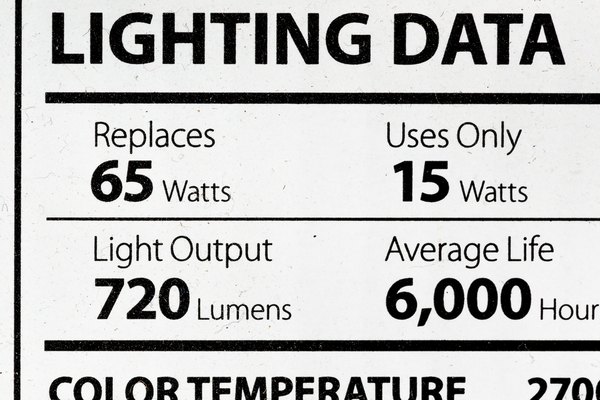
Determine the lumens rating of the lamp or flashlight. The lumens rating may be written on the box it came in or in the included instructions, or it may be printed on the lamp itself.
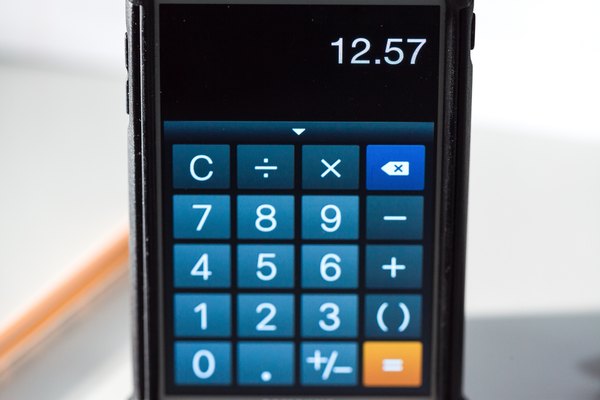
Divide the lumens rating by 12.57, using your calculator. For example, if your lamp is rated at 12.57 lumens, divide by 12.57 to determine that it has an output of 1 candlepower. If your lamp is rated to 25.14 lumens, it has an output of 2 candlepower.

Write down your calculation, so that you can compare your lamp's output to the output of other lamps that are rated by candlepower.
Things You'll Need
Tips
Tips
- The conversion factor 12.57 is actually 4 * pi.
About the Author
Kieran Saga began writing professionally for eHow and Answerbag in 2010. He is a scientist, lawyer, and student, and has been working in criminal and civil law since 2006. He holds a Juris Doctor and a Bachelor of Arts in linguistics with a concentration in computer science.