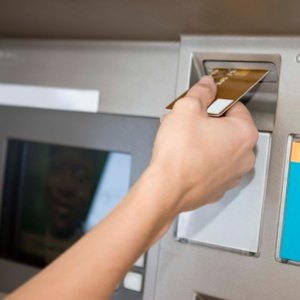

Automated Teller Machines, or ATMs, make it possible for a bank's customers to complete account transactions at their convenience. Most banks have an ATM machine adjacent to their drive-through services. Larger banks maintain ATM locations at other locations, such as malls, drugstores and gas stations, either indoors or outdoors. Regardless of the location, the method for using ATMs are similar.
Insert your bankcard in the manner depicted on the ATM machine.
Choose your preferred language.
Enter your personal identification number, or PIN. This is the number that either you chose or the bank assigned.
Identify the type of transaction you want to make, such as deposit, check balance or withdrawal.
Follow the prompts to complete the transaction that you chose. For instance, if you want to make a deposit, identify whether you will deposit a check or cash.
Complete any additional transactions.
Confirm that you have completed all your desired transactions.
Retrieve your bankcard and transaction summary.
Tips
Check your surroundings before using an ATM, especially at night. Shield your keypad entries when entering your PIN number. Prepare deposits ahead of time to expedite the ATM transaction. Choose ATMs that are in well lit areas. If you withdraw money, put it in your wallet or other safe place immediately after the transaction.
Warnings
You may have to pay bank or transaction fees for withdrawals, particularly if you're withdrawing funds from a bank other than your own.
Tips
- Check your surroundings before using an ATM, especially at night.
- Shield your keypad entries when entering your PIN number.
- Prepare deposits ahead of time to expedite the ATM transaction.
- Choose ATMs that are in well lit areas.
- If you withdraw money, put it in your wallet or other safe place immediately after the transaction.
Warnings
- You may have to pay bank or transaction fees for withdrawals, particularly if you're withdrawing funds from a bank other than your own.