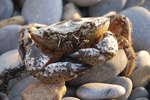
The turtle shell, formed of overlapping plates of keratin that envelop the soft body of the reptile inside, is one of nature’s best protective coverings. Turtles lack speed, and most are not great fighters, so they rely on their hard shells to protect themselves from predators. Nevertheless, some predators are more than capable of breaking a turtle shell when looking for a meal.
Piercing the Shell
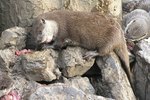
Honey badgers have strong jaws, sharp teeth and a determined attitude. They are opportunistic hunters who will give pretty much anything a go. Once they’ve caught a meal, they'll eat the whole thing, bones and all. So they’re no strangers to chowing down on hard, brittle body parts. Due to the immense power in their jaws, they are capable of crushing a turtle’s shell in just a few bites.
Perfectly Adapted Jaws
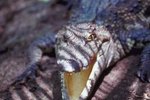
Crocodilians, due to the fact that they share habitat with turtles, are one of the most likely types of animal to prey on our shelled friends. Crocs and alligators are famous for their powerful jaws. However, they are not always successful in their endeavors to break turtles' shells and eat the flesh inside, as one video that captured an alligator giving up after 15 minutes of failing to break an Eastern river cooter’s shell proved. Unlike the honey badger, who pierces and tears at the shell with his sharp canines, crocs and alligators aim to crush the shell with their long mouths.
Crushing the Shell
Sea turtles are incapable of fully retracting into their shells like land turtles do, which leaves them exposed to risk of attack when nesting on land. Their shells may remain intact, but without the ability to protect their heads, this proves fruitless against a determined dog or coyote. At sea, things are different. The sea turtle's shell is softer than the land turtle's, which enables whales and sharks to easily break it during an attack.
Frustration and Confusion
When a big cat and a turtle come across one another, the turtle typically relies on frustrating the confused cat, who will typically paw at the turtle before attempting to bite the turtle. Once a big cat figures out that his dinner lies inside the hard shell, he’ll do his best to break through. Jaguars are the most common big cat threat to turtles and are more than capable of breaking turtle shells with their teeth.
Letting Gravity Do the Work
Birds, even the largest eagles, lack the power to break through a turtle’s shell with their beak or talons. But what they lack in brute force they make up for in smarts. Many large birds of prey, including golden eagles, are quite capable of picking up a turtle. Once he’s got a turtle in his grip, the clever eagle will soar to a great height, drop the turtle onto a hard surface such as rocks, smashing the turtle’s shell to pieces.
References
Photo Credits
-
David De Lossy/Photodisc/Getty Images
Writer Bio
Simon Foden has been a freelance writer and editor since 1999. He began his writing career after graduating with a Bachelors of Arts degree in music from Salford University. He has contributed to and written for various magazines including "K9 Magazine" and "Pet Friendly Magazine." He has also written for Dogmagazine.net.