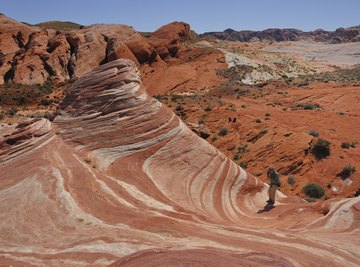

If you have lived in the same place for even a few years, you have probably noticed the effects of weathering on your surroundings, both the natural landscape and human-made edifices and roadways. For example, if you live in a dry but very sunny climate, you see paint on the sides of barns start to fade over the course of a decade or less.
While the effects of a few severe winters on buildings and highways may be more evident than other kinds of weathering, imagine the effects of countless seemingly inconsequential drops of water falling onto the same rocks over a period of years.
The effects of mechanical weathering over time are fairly evident at a glance, but the changes produced by chemical weathering are often harder to appreciate — and very instructive.
What Is Weathering?
You have already been given a few simple examples of weathering. Most sources divide weathering into two types: Mechanical weathering, which changes the form of objects without affecting their molecular composition (e.g., soil erosion), and chemical weathering, in which the composition of Earth's rocks and waterways are altered as a result of chemical processes.
Forms of weathering known as biological weathering that involve microorganisms such as bacteria can be classified under either of these headings, depending on the specific nature of the processes involved.
What Is Chemical Weathering?
Chemical weathering is defined as weathering that results in the alteration of the molecular structure of rocks and soil. These reactions can take place over very long periods of time; whereas the biochemical reactions in your body are catalyzed by enzymes that greatly speed them up, in chemical weathering the reactions usually must unfold without outside help.
Many areas can experience multiple types of weathering simultaneously. For example, if soil slides down into standing water as a result of mechanical forces, materials in the water or the water itself may react with these rocks and soil to produce changes to the environment. Some of these changes can greatly impact the local ecosystem, i.e., the living things in a particular place and the nature of their interactions.
Types of Chemical Weathering
Five examples of chemical weathering are summarized below.
Hydrolysis: This process is just the breaking apart of molecules by water molecules. This can happen when moving water erodes rock to produce a saline (salty) solution. This can impact the ability of aquatic organisms to survive in the environment in question.
Hydration: This is the addition of hydrogen, a very abundant molecule thanks to the abundance of water of Earth. When the mineral known as feldspar takes up hydrogen, "expelling" other positively charged atoms in the process, the end product is clay.
Carbonation: Carbonic acid is a weak acid formed from carbon dioxide and water:
CO2+ H2O ⟷ H2CO3
This acid is called "weak" because it donates protons reluctantly compared to other acids. But over time, it can dissolve rock, especially limestone. This can result in the formation of not only caves but enormous underground cave systems.
Oxidation: When iron atoms lose electrons, their properties change. In the presence of water, oxygen happily accepts these electrons. The result can be visible as rust on iron materials, and minerals containing iron expand and crack over time as the iron atoms are incorporated into different iron oxide forms depending on how many electrons are exchanged.
Acidification: The phenomenon of acid rain is a result of compounds such as sulfur dioxide and nitrogen gases reacting with water molecules in the atmosphere where clouds form. Coal-fired power plants that burn coal produce sulfur dioxide, and this results in the formation of sulfuric acid that can damage the ecosystems when rainwater containing it falls there.
References
About the Author
Kevin Beck holds a bachelor's degree in physics with minors in math and chemistry from the University of Vermont. Formerly with ScienceBlogs.com and the editor of "Run Strong," he has written for Runner's World, Men's Fitness, Competitor, and a variety of other publications. More about Kevin and links to his professional work can be found at www.kemibe.com.
Photo Credits
herreid14/iStock/Getty Images