

Varsity & Junior Varsity Differences
High school and college sports in the United States are typically played at the varsity and junior varsity levels, so any student athlete wishing to compete will join one of the two. While both types of teams require excellent athletic ability and offer fantastic opportunities for self-improvement, there are important differences between the two. High school sports use varsity and junior varsity sports teams most often, due to age differences and team needs. A coach can also determine who and what is considered a varsity team and varsity sport.
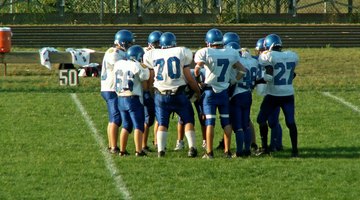
For example, at the high school level, football teams are normally divided into junior varsity and varsity teams. For the NCAA, it is rare to see JV players in a varsity game. Varsity and junior varsity athletes normally compete in sports like volleyball, football, basketball, and other sports for various sporting events needing school teams. Playing time does not change between junior varsity and varsity teams, unless playoffs call for it. Junior varsity teams are also referred to as sophomore teams, as their team members consist of mainly sophomore year students and players.
Age and Ability
The varsity team typically represents the high school or college in intercollegiate or national competitions. It's usually made up of older and more experienced players than the junior varsity team, like upperclassmen. In high school, this means that the team is made up of students in grades 11 and 12. But in some cases, and depending on the school, a highly talented freshman athlete may be accepted directly into varsity.
The junior varsity team is made up of younger or less experienced players, like underclassmen. Freshmen in high school typically join a junior varsity team first where they have time to mature and develop their skills and in later years may move on to varsity. In some cases, participation in junior varsity is a prerequisite to be eligible to play on the varsity level. While most JV players get referred to as benchwarmers, they are in fact still eligible players when needed and are contributors to the team.
Do Junior Varsity Players Compete?
Depending on the sport and a particular game, JV teams and junior varsity players may occasionally travel with the varsity team to games and be asked to participate when needed, for instance, to replace an injured varsity player in varsity games. Occasionally, if the game is less important, a school may send a junior varsity team to compete.
Other than that, junior varsity teams compete with other junior varsity teams in a much lower-pressure environment than varsity. JV players are often players who did not make the varsity team in tryouts, but this doesn’t mean they aren’t some of the best players. JV games often occur before a lead varsity game, but a game order can be changed depending on the circumstance.
Is Varsity Better Than Junior Varsity?
The varsity level may be something that every competitive student athlete aspires to achieve, but there are benefits to playing in junior varsity that go beyond participating in prestigious competitions. Because junior varsity is a much lower-pressure environment compared to varsity, it's an excellent setting for students to gain experience, hone their craft and develop leadership skills without the pressure of a big game.
Can You Participate in Both?
Some schools allow students to participate in both varsity and junior varsity competitions as long as the total number of competitions doesn't exceed the allowed contest maximums. For example, if a varsity team is allowed to participate in 40 contests according to the sport’s rules, and the junior varsity team is also allowed to participate in 40, a student athlete can participate in both as long as the total number of contests he participates in doesn't exceed 40.
Related Articles








References
Writer Bio
<!--StartFragment-->I am a current senior studying at the University of Missouri - Columbia with a major in Journalism and a minor in Sociology. I have interests in photojournalism, documentary journalism and design fields. <!--EndFragment--><!--EndFragment--><!--EndFragment-->