
Calculus, defined as the mathematical study of change, was developed independently by Isaac Newton and Gottfried Wilhelm von Leibniz in the 17th century. Engineering is defined as "the profession in which a knowledge of the mathematical and natural sciences gained by study, experience, and practice is applied with judgment to develop ways to utilize, economically, the materials and forces of nature for the benefit of mankind." Some engineers directly use calculus in their daily practice and some use computer programs based on calculus that simplify engineering design. Two methods of calculus, differentiation and integration, are particularly useful in the practice of engineering, and are generally used for optimization and summation, respectively.
Civil Engineering
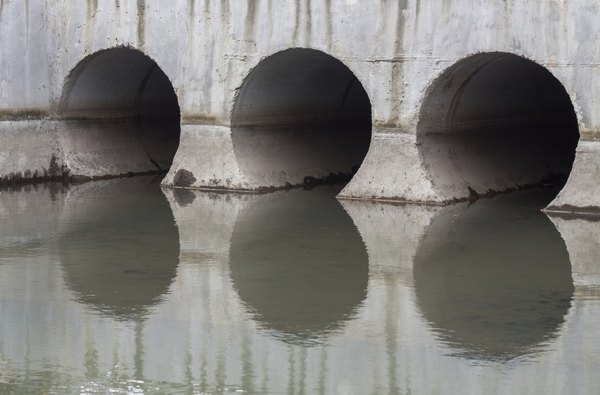
Many aspects of civil engineering require calculus. Firstly, derivation of the basic fluid mechanics equations requires calculus. For example, all hydraulic analysis programs, which aid in the design of storm drain and open channel systems, use calculus numerical methods to obtain the results. In hydrology, volume is calculated as the area under the curve of a plot of flow versus time and is accomplished using calculus.
Structural Engineering
In structural engineering, calculus is used to determine the forces in complex configurations of structural elements. Structural analysis relating to seismic design requires calculus. In a soil structure context, calculations of bearing capacity and shear strength of soil are done using calculus, as is the determination of lateral earth pressure and slope stability in complex situations.
Mechanical engineering
Many examples of the use of calculus are found in mechanical engineering, such as computing the surface area of complex objects to determine frictional forces, designing a pump according to flow rate and head, and calculating the power provided by a battery system. Newton's law of cooling is a governing differential equation in HVAC design that requires integration to solve.
Aerospace Engineering
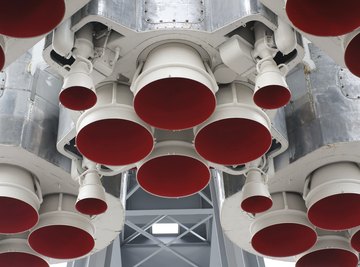
Numerous examples of the use of calculus can be found in aerospace engineering. Thrust over time calculated using the ideal rocket equation is an application of calculus. Analysis of rockets that function in stages also requires calculus, as does gravitational modeling over time and space. Almost all physics models, especially those of astronomy and complex systems, use some form of calculus.
References
Resources
About the Author
Instilled by a passion for all things food, Eric Lissner began food writing in 2011 while studying Civil Engineering at UCLA. After graduating summa cum laude, he began his engineering career while pursing writing on his personal blog.
Photo Credits
Antipov/iStock/Getty Images