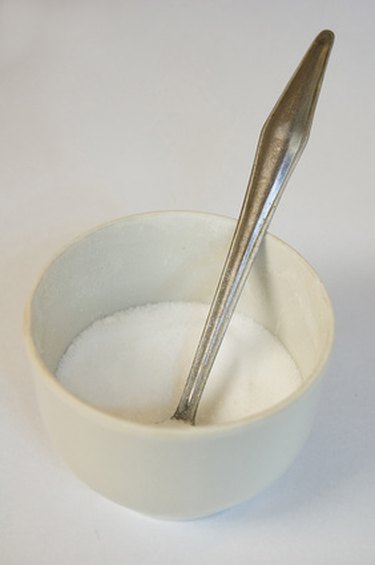
The water softener is a common system used for the treatment of household water supplies. The unit removes calcium and magnesium, minerals responsible for hardness, from the water. A process called ion exchange is one method of softening water. Salt, in the form of sodium chloride or potassium chloride, is an essential component of ion exchange water softening systems. Concerns regarding sodium consumption from softened water have resulted in an increased use of potassium chloride as an alternative.
Potassium
Video of the Day
Potassium is an element essential to life. It serves to regulate the movement of water in and out of cells and is required for carbohydrate metabolism, secretion of insulin and protein synthesis. The foods you eat serve as your primary source of potassium. According to the University of Maryland Medical Center, the recommended daily allowance of potassium for adults is 2,100 mg. Children under the age of 10 require less. Dietary sources of potassium include bananas, potatoes, citrus juices and tomatoes. Drinking water that has been softened using potassium chloride is also a source of potassium.
Video of the Day
Potassium Ion Exchange
The process of potassium ion exchange to soften hard water occurs exactly as the name implies. Calcium, magnesium and potassium are all elements that exist as ions (charged atoms) in solution (water). As hard water flows through a potassium chloride resin, the magnesium and calcium ions in the water switch places with the potassium on the resin. The hard minerals remain trapped and the potassium ions that gave up their positions on the resin to make room for the minerals are released with the treated water.
Hyperkalemia
Hyperkalemia is the term used to describe the presence of too much potassium in the blood. According to the World Health organization, “adverse effects due to potassium consumption from drinking-water are unlikely to occur in healthy individuals.” People who may encounter problems from drinking water containing potassium include those with kidney disease, older individuals whose kidneys no longer function as efficiently as they once did and infants. People having conditions such as heart disease, hypertension and diabetes, as well as those taking certain medications, may also be at risk for developing hyperkalemia.
Adverse Effects
Drinking water treated with potassium chloride is more likely to produce adverse effects in susceptible individuals if the water being treated has an extremely high mineral content. The higher the mineral content, the more potassium released into the treated water. According to the World Health Organization, potassium toxicity may cause chest tightness, nausea and vomiting, diarrhea, shortness of breath and heart failure. Consequently, the WHO recommends that individuals susceptible to toxicity not receive potassium supplementation except under close medical supervision.
Alternatives
Concerns regarding excess consumption of sodium or potassium from treated drinking water have led to the development of salt-free water softening conditioners. The systems employ the use of ceramic granules. As the water flows over the ceramic medium, the calcium and magnesium attach themselves to the granules to form crystals. Unlike traditional salt systems, ions are not exchanged. As a result, potentially harmful elements such as sodium or potassium are not released into the treated water. Magnetic and electronic softening systems are also available.