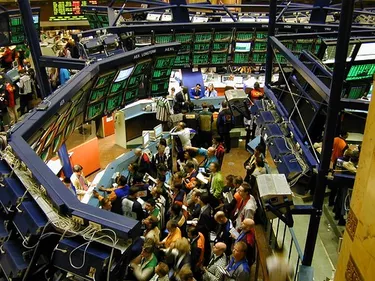
The stock market is a public forum for the trading of stock, or ownership, of various companies. As such, the stock market generally acts as an indicator of the wellness of a nation's economy. Investors have two terms to describe the health of the market: bull and bear.
Bull vs. Bear
Video of the Day
In a bull or "bullish" market, investors have increasing confidence in the stocks that are being bought and sold. In a bear or "bearish" market, investors have little confidence in the stock.
Video of the Day
Effects of Bull Market
A bull market means that stocks are trading for a higher price and more often. Investors generally trade more during a bull market than a bear market because of the increased prices.
Bull Market as Predictor
A bull market is also generally seen as an indicator for future economic recovery. In other words, before an economy comes out of a recession, they will have increased trading and prices (a "bull market") in the stock market.
Example of Bull Market
One well-known example of a bull market is the dot-com bubble during the 1990s when stocks were trading for high prices. However, when the dot-com bubble burst in the early 2000s, the market became a bear market.
How to Remember Bull vs. Bear
A bull keeps his horns in the air, which point upward like the prices in a bull market. A bear keeps his paws low, which point downward like the lowering prices in a bear market.