


The history of paper currency is rooted in the monetary exchange system, which replaced bartering for goods. Coins created with a specific amount of gold, silver or bronze established a uniform measurement of exchange, which was difficult to transport because of the weight. In the 19th century, paper money began appearing to replace varying coin systems, often as a result of regime changes but sometimes because of war. Early paper money was placed on the gold or silver standard, which allowed equal exchange of gold for the value printed on the paper.
China
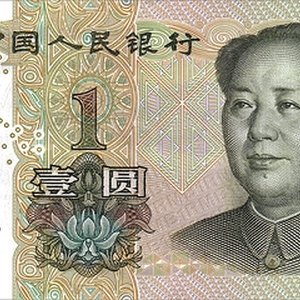
The Chinese government, under the Sung dynasty, issued the first official paper money, which had an expiration date, was in short supply and was limited to select areas. The government required the money's replacement every three years, charging the person a 3 percent service charge in order to exchange it for new money. The old money was never retired or destroyed, however, leading to rampant inflation by 1106. The Yuan dynasty abolished the expiration of the money, allowed the paper to equal hard commodity rates such as gold, silver and silk, and transitioned the old Sung currency to its own currency. This dynasty also abolished the use of metal currency in favor of the paper currency and demanded that taxes be paid in paper currency. An internal war caused rampant inflation and collapsed the currency altogether, leading to its total disappearance by 1500. In the 1890s, banknotes were issued based on the yuan, which was on the silver standard. The country issued currency through its banks, which led to differing currencies in the 1930s along with the Japanese who invaded at that time. Since 1948, China has been on the gold standard, calling its currency the gold yuan.
Scotland
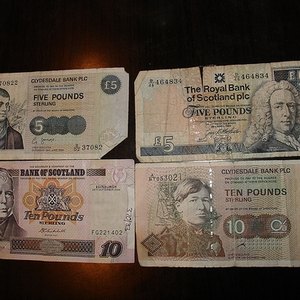
The Bank of Scotland, established in 1695, issued 5, 10, 50 and 100 shilling banknotes, beginning its business ventures by making commercial loans and doing business with only the very wealthy. The bank introduced a 20-shilling banknote in 1704. Unlike modern paper money, these banknotes looked more like checkbooks without the perforated edge. The Scots were the first to incorporate color into their money in 1777.
Germany

In 1873, Germany issued its first paper currency, calling it the gold mark. German paper currency was called the papiermark, beginning in 1914 as the mark lost its link with gold because of World War I. In 1924, Germany introduced the reichsmark, replacing the papiermark because of the rising inflation. Because the value of a reichsmark was worth 1 trillion papiermarks, a rentenmark bridged the gap, which was based on the gold standard. In 1948, the United States, France and Great Britain issued the Deutsche mark to West Germany, replacing the reichsmark and rentenmark. The Soviets issued their version of the Deutsche mark later that year. In 1990, after the collapse of the Soviet Union, the West German Deutsche mark helped unify the country. In 2001, Germany joined the European Union, replacing the Deutsche mark with the euro.
Japan
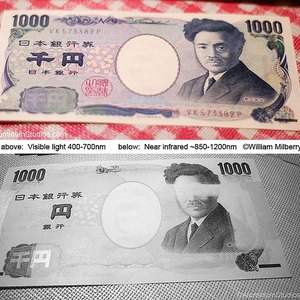
In 1872, attempting to establish a standard type of money, the Meiji government established the first, widely accepted paper currency called the yen. The yen adopted the gold standard, and the first banknotes resembled U.S. banknotes. After World War I, the yen was tied to the value of the U.S. dollar, until 1973 when the United States abandoned the gold standard. As of 2007, the value of the yen has been kept low as the Japanese economy focuses on high exports, low interest rates and policies that strictly regulate inflation.
United States
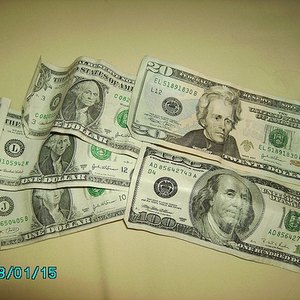
The Massachusetts Bay Colony issued the first paper money on American soil in 1690. In 1775, the Continental Congress issued paper currency--called continentals--to pay for the Revolutionary War. Instead of backing the paper money's value with precious metals, the money was backed with anticipated tax revenues, which led to counterfeiting and devaluation. Established in 1791, the first bank of the United States issued banknotes to eliminate confusion and simplify trade. In 1861, Congress authorized the United States Treasury to issue paper money called demand notes, which were non-interest-bearing, in order to pay for the Civil War. In 1865, the U.S. Treasury issued gold certificates against gold bullion deposits, taking them out of circulation in 1933. In 1877, the U.S. Treasury took over all printing and engraving in 1877. In 1973, the Unites States departed from the gold standard.
References
- A Short History of Chinese Paper Money
- History of Scottish Banks and Bank Notes
- Fun Facts About Money
- The National Archives. "Going Off Gold." Accessed Sept. 24, 2020.
- Congressional Research Service. "Brief History of the Gold Standard in the United States," Summary. Accessed Sept. 25, 2020.
- United States Government. "An Act to Provide Relief in the Existing National Emergency in Banking, and for Other Purposes," Page 2. Accessed Sept. 24, 2020.
- Peter Bernstein. "The Power of Gold: The History of Obsession," Page 3. John Wiley & Sons, 2000.
- U.S. Senate. "Constitution of the United States." Accessed Sept. 24, 2020.
- Congressional Research Service. "Brief History of the Gold Standard in the United States," Page 1-18. Accessed Sept. 24, 2020.
- V. S. Somanath. "International Financial Management," Page 53. Accessed Sept. 24, 2020.
- Congressional Research Service. "Brief History of the Gold Standard in the United States," Page 2. Accessed Sept. 24, 2020.
- Allan L. Meltzer. "A History of the Federal Reserve, Volume 1: 1913–1951," Page 11. University of Chicago Press, 2003.
Writer Bio
Eric Tilden is a fantasy novelist and author of a weekly newsletter for P*JET * IMAGES, an online art website. He has been working on his fiction novels since 2005, and has written for Demand Studios since June 2009. Tilden attended the University of Michigan-Flint, obtaining an education in art, music theory, archaeology, accounting, calculus and basic graphic design.