Ford Power Stroke Problems

Ford Power Stroke Problems thumbnail
Black smoke is one sign of Power Stroke problems.

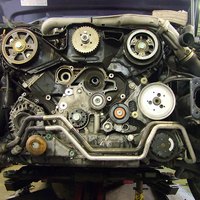
The Power Stroke diesel engine has been offered in heavy-duty Ford trucks since the 1994 model year. Originally built by Navistar International, the Power Stroke engine was offered as a 7.3-liter, then as a 6.0-liter, then a 6.4-liter. For the 2011 model year, Ford took over the Power Stroke program, offering a 6.7-liter diesel. The Power Stroke, despite a reputation for reliability and power, hasn't been free of its share of teething problems. Most are well documented, if not necessarily cheap to fix.

  1. Soot Problems

    • Older Power Stroke diesels developed a reputation for creating huge amounts of soot, which would deposit itself inside the exhaust gas recirculation (EGR) cooler and variable-vane turbocharger. EGR clogging can lead to turbo overboosting, and soot in the turbo can lead to malfunction of the turbo's internals.

    Mechanical Failure

    • Older Power Stroke diesels had Torque-to-Yield (TTY) bolts, which permanently stretch when torqued to keep the cylinder head on the engine. These TTY bolts are prone to failure under the higher boost levels seen in even lightly modified engines.

    Emissions Recall

    • On September 29, 2003, Ford issued a recall (number 06E17) for any truck built before that date, intended to address faulty computer programming that caused malfunction of the truck's Exhaust Backpressure Sensor (EBP). a faulty EBP can cause hard starting, a rough idle, excessive smoke and loss of power.

Related Searches:

References

  • Photo Credit exhaust fulmes image by bilderbox from Fotolia.com

Comments

You May Also Like

Related Ads

Featured