

Butyl Rubber Vs. Natural Rubber

Natural rubber (also called India rubber) was originally tapped from the plant secretion latex. Its chemical composition gives it an elasticity, which is its major market draw with consumers. Because it is an elastomer, it can be combined with other materials that affect durability, resistance and flexibility.
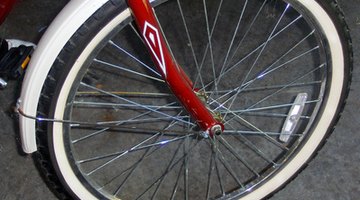
Butyl rubber, for instance, is a polymer developed to make rubber more durable.
General Properties
Natural rubber polymer consists of natural rubber and isoprene. Until rubber was vulcanized by Charles Goodyear in 1839, it was sensitive to change in temperature, which would change its consistency and appearance. Natural rubber's new composition would make it a popular choice for industrial bands, shoes and shoe soles, and other commercial items. Butyl rubber is composed of isobutene and isoprene, and was introduced in 1943. It is more durable than natural rubber, making it the preferred choice with larger industrial products.
High and Low Resistance
While natural rubber and butyl rubber are vulnerable to petroleum-based liquids, natural rubber is also easily attacked by acids, fats and ozone. Butyl rubber, in contrast, is resistant to oils, greases, ozone and oxidizing chemicals. Among butyl rubber's notable strengths is a low permeability to air.
Common Uses
The rubber industry experienced its first boom when the bicycle was popularized sometime before 1900, then grew with the invention of the automobile. Today, natural rubber polymer is still used for household items like rubber bands, appliances and stationery. Butyl rubber's added durability diversifies rubber usage by making it the preferred material for various mechanical goods, hoses and construction sealants.
The Drip Cap
- Natural rubber (also called India rubber) was originally tapped from the plant secretion latex.
- Butyl rubber, for instance, is a polymer developed to make rubber more durable.
- While natural rubber and butyl rubber are vulnerable to petroleum-based liquids, natural rubber is also easily attacked by acids, fats and ozone.
References
Resources
Writer Bio
Christopher de la Torre has been writing about science and communication since 1998. His work appears on websites including Singularity Hub and in "Vogue." He holds a Bachelor of Science in biology and a Bachelor of Arts in English from Eastern Connecticut State University and is pursuing a master's degree in English from George Mason University.
Photo Credits
- bicycle tire image by Leticia Wilson from Fotolia.com
- bicycle tire image by Leticia Wilson from Fotolia.com
More Articles

