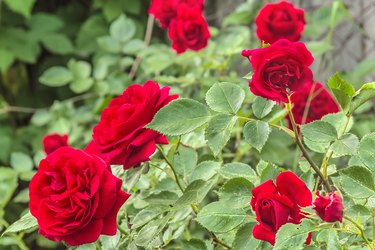
Roses can live for decades, sometimes even a century or more if they were grown on their own roots, rather than grafted. Most home gardeners purchase roses either bare root or in containers — but to explore the full life cycle of a rose (Rosa spp.), let's start at the beginning: the seed. While scientists have found fossils that identify the rose as far back as 35 million years, the first rose started as a seed.
Hip to Seed
Video of the Day
The seed of a rose comes from the rose hips, the "fruit" produced after the flower fades. Because rose flowers contain both female and male parts (ovaries and stamens), they're considered bisexual and need no other rose plant to pollinate the flower and set hips. Hips, which can be decorative in a winter garden, are also high in vitamin C and used to make rose hip tea. Not all roses set hips well, and some hybrid selections don't produce hips at all, but several cultivars among all the categories of roses do, including species roses, landscape or shrub roses, hybrid musk roses, ramblers and even some David Austin English roses, according to the Heirloom Roses website.
Video of the Day
Many gardeners prune off the hips, but if left on the bush, they'll become ripe, usually after about four months. At this time, they should be orange or red, although some varieties retain their initial green color. The hips contain the rose seeds, which can be harvested by slicing the hip open and removing the seeds from the inner pulp and shell.
Seed to Plant
The rose seeds can be sown to produce rosebushes, although sowing rose seed directly is usually the purview of rose hybridizers who have cross-pollinated different varieties to create new cultivars. Rose seeds do require some care to ensure germination, while some varieties need to be stratified; that is, placed in the refrigerator to simulate a period of dormancy.
It typically takes about six weeks for rose seeds to germinate, and sometimes many months. When they're about 6 inches tall, rose growers usually transplant them into individual pots. From germination to maturity usually takes about three years, at which time the tiny seedling has become a full-grown rosebush.
Plant to Flower to Hip
How long after germination will a rosebush flower? Some rose seedlings can produce their first bloom after just six weeks. This starts as a bud surrounded by sepals. When the bud opens, the sepals resemble small green leaves at the flower's base.
The female part of the flower is the pistil, containing four parts: the style, the stigma, the ovary and the ovules. The style is an elongated tube at the center with the stigma at its tip. The stigma receives the pollen from the male stamens, which is then transferred down the style and to the ovary, a hollow cavity at the base of the flower that contains the ovules. The ovules, in turn, contain egg cells. The stamen, or male part of the flower, is composed of the filaments which support the anthers, which contain the pollen.
Pollination occurs when temperatures are lower than 85 degrees Fahrenheit. Rose breeders schedule manual pollination in the morning before it gets too hot and the plant loses excessive water. Once pollinated, the flower looks the same, but its ovules will be ready to become the hips once the flower fades, if fertilization has been successful. And the cycle begins again.