
Top 10 Runners in the World

Runners come in all shapes and sizes, but one thing they all have in common is determination. The past decade of running has seen superstars who have raced all around the world, from Rieti, Italy to Doha, Qatar to Trinidad and Tobago to Port of Spain.
The top ten fastest runners in the world come from different events like marathon running, sprinting and other events from the IAAF. The distance runners are masters of keeping pace and using grit to finish a race. The sprinters are powerful and coordinated, and rarely make mistakes in their races.
Below are the top 10 fastest runners in the world, many have gold, silver or bronze medals. Some are USA champions with the fastest times in their respective races, while others have been accused of doping.
Eliud Kipchoge
The winner of the gold in the Rio Olympics Marathon event, Eliud has come dangerously close to beating the two-hour mark on the marathon. At barely over four minutes over two hours, he is in the running to break that mythical time barrier.
He hails from Kenya and specializes in the 3,000-meter, 5,000-meter and marathon races. He also won medals in the Athens 2004 games and the Beijing 2008 Olympics, making him a very decorated world champion. He went on to race the Tokyo marathon.
Meseret Defar
Meseret's last name, Defar, means "bold" in Amharic, which is her native language. Bold is the best way to describe the way she burst onto the running scene in 2004, taking Olympic gold in the 5,000 meters. Over her career she excelled in the 5,000 meters, winning two olympic gold medals and one bronze. She also was a fierce competitor in the 3,000 meters.
Mo Farah
One of the greatest athletes the United Kingdom has ever produced, Mo is a world famous distance runner. He is also one of the most dominant.
He won both the 5,000 and 10,000 meters in the 2012 London Olympics. He followed that up by winning the same titles in the European Athletics Championships in 2014. As if that weren't enough, he took home gold once again in the 5,000 and 10,000 meters in the 2016 Rio Olympics, sealing his status as one of the greatest distance runners of all-time.
Almaz Ayana
In 2016, Almaz Ayana broke a 23-year old record in the 10,000 meters. She broke it on the biggest stage in the world, the summer Olympics, with a time of 29 minutes, 17 seconds and forty-five milliseconds. She beat the previous record by a whopping 14 seconds. She was subsequently named one of the top runners of the year in 2016, alongside the sprinting legend Usain Bolt, by the International Association of Athletics Federations.
Meb Keflezighi
One of the most well-known distance runners of all-time, Meb might be past his peak but he is still important to the sport. He is the only athlete in history to win the New York City Marathon, the Boston Marathon and an Olympic medal.
He's most well-known for his successes in various marathons over the years. He won the 2014 Boston Marathon, which was an extremely emotional race because of the bombings at the finish line. He's turned his attention now to writing, speaking and coaching runners to their full potential.
Molly Huddle
Molly Huddle is one of the best American distance runners in the sport. She became an all-American 10 times in track and field, then went on to break the American 10,000 meter record in the 2016 Olympics. After that impressive finish she switched gears and trained for her first New York City Marathon, where she came in third. She'll likely have more podium finishes in marathons in the near future.
Galen Rupp
After being praised by ESPN twice as an Academic All-American and winning a staggering five NCAA track and field titles in his senior year at the University of Oregon in Eugene. He's a track and field athlete who has been in three Olympic Games, and competes in the 5,000 meter, 10,000 meter, and marathon. He's taken home a silver medal for the United States in the 10,000 meter and a bronze in the marathon.
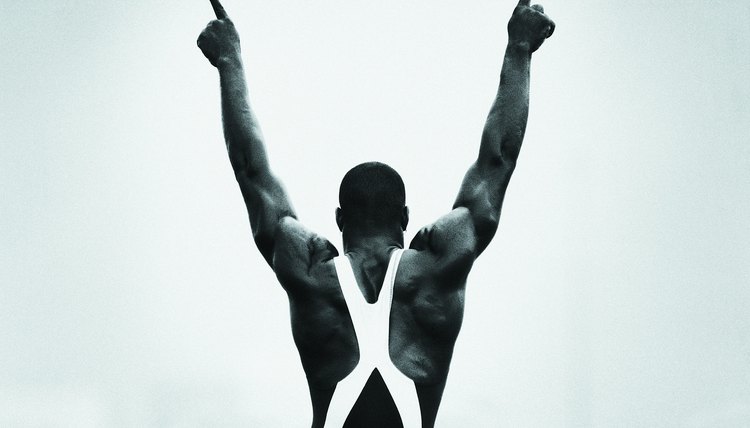
Some of the top runners in the world are superstar athletes.
Jemima Jelagat
Expect to see much more of this young runner in the near future. She was born in 1993 and is already breaking world records. In just her fifth half-marathon competition, the Kenyan broke the world record by fourteen seconds. On her way to setting the record she also happened to break the 10, 15 and 20-kilometer world records. She also has a bright future in the 5,000 and 10,000 meter races.
Usain Bolt
Laughing his way to astonishing finishes, this long and lanky sprinter breaks boundaries every time he touches the track. He has been known as the fastest sprinter and Olympic champion for Jamaica. His charisma launched him from fame to stardom and he became one of the most well-known athletes in the world. His personable attitude sets him apart from other athletes, he’s gone so far as to nickname his competitors. He gave Yohan Blake, a 2011 gold medalist the nickname “The Beast.” Another famous 100m athlete is Richard Thompson “Torpedo” who ran the 100m in 9.82 seconds.
He is the fastest man on earth, beating some impressive competition for three Olympic games in a row to win gold medals in the 100-meter dash and 200-meter races. He also has three gold medals with his Jamaican teammates in the 4 x 100 meter relay.
Allyson Felix
In 2012, Allyson Felix gave a Usain Bolt-esque performance by dominating the sprinting events at the London Olympics. She is a gold medalist in the 200-meter individual, 100-meter relay and 200-meter relay. Four years later she defended her relay gold medals again in Rio. She's also won multiple gold medals in each of those events during track and field world athletic championships.
Asafa Powell
From 2005-2008 Powell was a world record holder in the 100m sprint by breaking the 10 seconds barrier with a time of 9.77 seconds. He was born in Jamaica and held several world record times. In the Beijing Olympics in 2008, he beat his own record in the 100m with a time of 9.72 seconds while in Switzerland. His running career ended around the Berlin 2009 world championships when he tested positive for a drug test.
Other Honorable Mentions
Below are other top runners who have excelled at their events.
- Justin Gatlin
- Maurice Greene
- Nesta Carter
- Tyson Gay
References
Writer Bio
Henry is a Philadelphia-based personal trainer and writer. He has trained a wide range of clients, from professional athletes to working professionals. Feel free to contact Henry with any questions regarding an article that he's written.