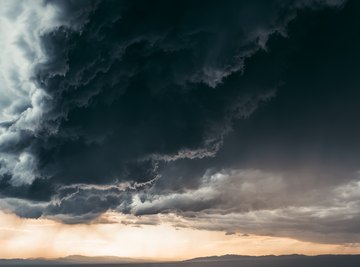

In order to be classified as a typhoon, a tropical storm must reach winds of at least 33 meters per second (74 miles per hour) and be located in the Northwest Pacific Ocean. Typhoons are major storms that affect everything they come in contact with, from boats to agriculture to human beings.
Humans
People can be killed, injured, or lost during typhoons. Flooding can cause people to drown, houses to be completely destroyed, property to be swept away, and farms to lose all of their crops to the winds and relentless rains. Mudslides and power outages are common. Food shortages, lack of access to good medical care and medical supplies, and limited access to major roads and cities can further complicate the problems caused by a typhoon.
Animals
Typhoons cause major flooding, which can drown animals and destroy their natural environments. When smaller animals and food supplies disappear or get killed, it affects larger animals because they can no longer find enough food. Livestock and other domesticated animals suffer when man-made shelters collapse, when their human caretakers are unable to care for them, and when they are exposed for long periods of time to violent winds and torrential rains.
Plants
Plant life can easily be swept away by floods and severe winds. Even trees cannot withstand the sheer force of a typhoon's strength indefinitely. Excessive rain can cause plants to drown, and it also causes soil erosion. Mudslides often take plants down with them, ripping up their roots and killing the plant.
References
- Guardian.co.uk: Deadly typhoon Morakot and tropical storm Etau pummel east Asia
- World Health Organization: After-Effects of Four (4) Typhoons and the Status of Relief and Recovery Operations in Quezon
- National Oceanic and Atmospheric Administration: What is a hurricane, typhoon, or tropical cyclone?
About the Author
Desdemona Delacroix has been working as a freelance author in her spare time since 2000, writing short do-it-yourself and current events articles. She holds a Bachelor of Science degree in psychology from the University of Maryland University College, and she occasionally offers tutoring services in writing to undergraduate college students.