Acetate (often mistakenly called acetone), can be produced from vinegar using several ingredients in a laboratory setting. Acetate is a derivative of acetic acid (a component of vinegar) and is one of the most common building blocks for biosynthesis. Applications for acetate include the formation of aluminum acetate (used in dying), ammonium acetate (a precursor to acetamide), potassium acetate (used as a diuretic), and vinyl acetate (a precursor to polyvinyl acetate). Acetate is commercially important for the production of these compounds.
- 4 grams of sodium bicarbonate
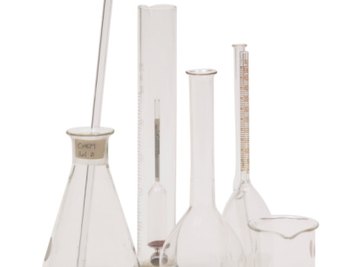
- 500 milliliter flask
- Watch glass
- 150 milliliters of acetic acid
- 25 milliliters of distilled water
- 50 milliliter beaker
- Stirring rod
- Hotplate
Protective goggles and gloves should be worn whenever chemicals are being handled.
Place 4 grams of sodium bicarbonate in a 50 milliliter beaker. Pour 25 milliliters of distilled water into the beaker with the sodium bicarbonate and stir with the stirring rod until all sodium bicarbonate is dissolved.
Pour the water and sodium bicarbonate mixture into a 500milliliter flask.
Slowly pour 150 milliliters of acetic acid into the 500 milliliter flask. Wait for any bubbling to cease. Once all bubbling has stopped, stir the mixture with the stirring rod for 2 minutes and set the mixture aside.
Plug in a hotplate and place it on a secure, heatproof surface. Set the 500 milliliter flask containing the acetic acid, sodium bicarbonate and water on the hotplate and allow the mixture to reach a gentle boil. When the mixture begins to boil, cover the opening of the flask with the watch glass.
Continue to heat the mixture until all of the liquid has boiled off and only powder remains at the bottom of the flask.
Turn off the hotplate and unplug it. Allow the flask to cool to room temperature before handling it. The powder in the flask is your newly produced acetate.
Things You'll Need
Warnings
References
Warnings
- Protective goggles and gloves should be worn whenever chemicals are being handled.
About the Author
Samuel Pickens has been writing since 2004. He has a Bachelor of Education and works as an English tutor.
Photo Credits
PhotoObjects.net/PhotoObjects.net/Getty Images