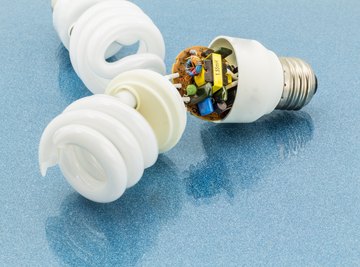
Many different types of lightbulbs require the use of a ballast to properly function, but there are only a few different types of ballasts available to consumers. Each type of has practical applications.
Types
According to the California Energy Commission, electronic ballasts and magnetic ballasts are the two main types on the market. Adaptable ballasts are a specific type of electronic ballast.
Function
The Lighting Research Center claims that the basic function of any type of ballast is to regulate a lightbulb's input energy and provide starting voltages. A single adaptable ballast can be employed to operate several lamps of varying voltages.
Features
Magnetic ballasts can be bothersome to some people because they flicker upwards of 120 times per second. Electronic ballasts operate relatively quietly, nearly eliminate flicker and are more energy-efficient than magnetic ballasts.
Lightbulbs
Several types of lightbulbs, like high-intensity discharge (HID) lightbulbs including metal halide and high-pressure sodium lightbulbs, utilize ballasts to control energy input. Fluorescent lightbulbs also employ ballasts.
Applications
Electronic ballasts have wider applications and are often used to replace magnetic ballasts. However, high-output light bubs still require magnetic ballasts.