Reasons for Hair Loss on Sheep

Reasons for Hair Loss on Sheep thumbnail
Animals in poor health are more susceptible to insect-borne illnesses.

Hair loss on sheep is an indication of either insect infestation or disease and should be addressed as soon as the condition is identified.

  1. Mange

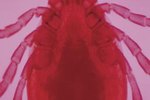
    • Mange is also known as scabies, scab or itch. It is caused by mites that burrow under the skin and, in some cases, in the hair follicles of animals. As a result of burrowing in the hair follicles, an animal will lose hair and may experience secondary infection due to continuous scratching.

    Lice

    • Lice irritate animals by biting and sucking blood from their hosts. Lice infestation causes constant scratching which can result in loss of hair and wool.

    Scrapie

    • Kelli Gunderson, Livestock Editor at Agri-View, writes that scrapie is "a fatal disease affecting the central nervous system of sheep and goats and is most commonly spread when lambs or kids come into contact with placentas of infected ewes or does."

      Among the symptoms is chronic scratching which can cause bald spots.

    Ringworm

    • Ringworm is not caused by a worm but by a fungus. Ringworm usually appears on the face, ears and neck on the infected animal. Symptoms of ringworm are hair loss, with flaky, crusty, irritated skin.

    Transmission

    • Animals infected with insect-borne disease should be quarantined.
      Animals infected with insect-borne disease should be quarantined.

      All of these conditions are highly transmissible. Mange and lice are more problematic in the winter when animals share close quarters. Animals infected with insect-borne disease should be quarantined. Animals that are in poor health are more susceptible to lice. Ringworm can be transmitted from animals, soil or contaminated equipment.
Related Searches:

References

Resources

  • Photo Credit sheep image by wilmar huisman from Fotolia.com schafherde - sheep image by Cornelia Pithart from Fotolia.com

Comments

You May Also Like

  • How to Care for Hair Sheep

    Hair sheep are sheep with a greater proportion of hair than wool fibers. This means they do not need shearing, a fact...

  • Hair Loss Due to a Nervous Condition

    According to the American Osteopathic College of Dermatology, it is normal for us to lose up to 100 hairs a day in...

  • Remedies for Hair Loss in Rottweilers

    Remedies for Hair Loss in Rottweilers. A number of conditions could cause hair loss in a Rottweiler so it is better to...

  • Definition of Banding

    All lambs are born with tails, much longer than what most adult sheep have. Much like many canines, such as cocker spaniels,...

  • What Are the Causes of Hair Loss in a Papillon?

    Papillons are the butterflies of the dog world. Their long, soft coats are a thing of beauty. It can be extremely distressing...

  • Sheep Breeding

    Watch a naturalist from the Massachusetts Audubon Society's Drumlin Farm explain the basics of sheep breeding in this free online video.

  • Hair Loss in Dogs

    Dogs can experience hair loss for a vast number of reasons, and only a veterinarian is qualified to diagnose individual problems. However,...

  • Causes of Goats Losing Their Hair

    Causes of Goats Losing Their Hair. Goats are domesticated animals related closely to sheep and are raised for their milk, hair and...

  • Reasons Why Kittens Lose Hair on Their Tail

    Hair loss affects not only humans, but animals too. The condition of hair loss is called alopecia. Though it can affect any...

  • Massive Hair Loss in Dogs

    Massive hair loss in dogs, also known as alopecia, can be caused by a number of problems. Various allergic reactions, nutritional deficiencies...

  • Fun Facts About Farm Animals for Kids

    Cows, pigs, sheep, chickens and goats are staples of childhood learning through toys, educational television shows and cartoons. However, there is more...

  • What Are the Causes of Hair Loss Around a Cat's Eyes?

    Your cat may lose hair around its eyes for a variety of reasons. These conditions can be very irritating to your cat...

  • Types of Rabbit Fur

    Rabbit fur is sought after for various uses, from apparel to batting inside bedding. According to the American Rabbit Breeders Association, there...

  • How to Care for Sheep

    During his term from 1913 to 1921, President Woodrow Wilson kept sheep to trim the White House lawn. Years after Wilson's cost-cutting...

  • Ideal Diet for Good Hair Growth

    Healthy hair growth is possible with the help of hair-friendly vitamins and minerals, which are present abundantly in nature's finest foods. On...

  • How to Make Your Own Stick Figure Family

    There are many applications on the Internet that allow you to create generic stick figures and even groups of stick figures. If...

  • Ringworm in Livestock

    Ringworm is a common skin infection caused by various types of fungal species known as dermatophytes. Ringworm infections can occur in humans,...

  • Hask Placenta Hair Treatment

    The creation of Hask placenta starts with a sheep. After a mother sheep has her child, placenta is taken from the mother....

  • How to Prevent Mammal Hair Falling Out in Taxidermy

    You take the time to go out and stalk, hunt, shoot, field dress and mount an animal and then you find hair...

  • Sheep Diseases: Scabies

    The symptoms of sheep scabies include scaly, crusted, yellowish sores, hide damage and wool loss. The Iowa State University Center for Food...

Related Ads

Featured