


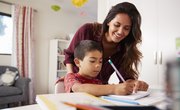
When your daughter or son reaches school age, it is time to make a decision about the type of educational environment that will be most effective for your child. Many parents look toward public school as an instinctive option, but homeschooling gives parents and students an alternative setting that has a wide range of benefits. Parents of school-aged children should study the differences between public school and home school to determine the best choice for their child.
Academic Environment
Students in public school are exposed and subjected to a particular academic environment of which they -- and their parents -- have no control over. Many parents may see this as a downside to public school, especially if they have concerns about the types of moral values or behavioral instruction their children are being inadvertently taught in school settings. A 2009 publication by the U.S. Department of Education's National Center for Education Statistics states that one of the primary reasons that parents admit to homeschooling their children has to do with being able to control the academic environment. Homeschooling your child affords you the ability to control his learning environment by minimizing distractions and incorporating social time when academic lessons are over.
Individualized Attention
Homeschooling your child gives him individualized attention that the large class sizes in public schools fail to offer. In a home school setting, you and your child have one-to-one lessons, which can enhance the learning process. Public school teachers, on the other hand, have classrooms full of twenty to thirty children to provide attention to, which decreases the amount of attention that each student gets from the teacher. In the end, this can cause some students to fall behind with their lessons because they are not getting the proper instruction they need for assignments and projects.
Curriculum
In public school, an academic curriculum is pre-established by the school system, but some parents may not agree with the curriculum being taught to their children. Whether parents find the curriculum too elementary or too advanced, they have no way to adjust what a public school decides to teach to the students. Homeschooling, however, gives parents the authority to create a curriculum based on what types of information students of a particular age and grade level should know.
Health and Safety Concerns
A significant difference between home school and public school has to do with that of germ control. In public schools, children and teachers are exposed to a variety of illnesses, such as chicken pox, the flu and common colds; however, homeschooling your child protects her against direct exposure to germs, which can help keep her healthy.
Social Aspect
Children who are homeschooled miss out on a social component that can be advantageous to their personal development, maturity and social skills. Parents who opt to home school their children should find a way to integrate social aspects into their child's daily structure, such as signing him up for sports teams or community clubs with other children his age.
Related Articles






References
Writer Bio
Kyra Sheahan has been a writer for various publications since 2008. Her work has been featured in "The Desert Leaf" and "Kentucky Doc Magazine," covering health and wellness, environmental conservatism and DIY crafts. Sheahan holds an M.B.A. with an emphasis in finance.