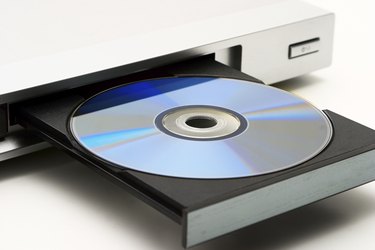
DVDs come in a number of different formats, which are used in different parts of the world. The PAL format is used in a large portion of the world but not in the United States; the U.S. uses a different format known as NTSC.
What Is PAL?
Video of the Day
PAL stands for Phase Alternating Line, which is a television encoding system that is used in many countries throughout the world. PAL is an analog system. A PAL DVD is simply a DVD that uses the PAL encoding system.
Video of the Day
Development of PAL
When Western European countries were introducing color television in the 1950, they were looking for a way to overcome the weaknesses of NTSC. Color tone shifting was common under weak transmissions. This led to the development of both SECAM and PAL, which were attempts to develop a standard for a 50-fields-per-second picture frequency.
DVD Players
PAL DVDS use a 625-line/50HZ line count and frame rate system, while NTSC DVDs use a 525-line/60HZ system. The formats are not compatible; you must have a DVD player that can handle a PAL disc to be able to watch it. A multi-region DVD player will play a number of different DVD formats.
Where Is PAL Used?
PAL is currently used in over 120 countries around the world. Australia, New Zealand, and most of Europe and Africa use the PAL system. There are a number of different versions of PAL but they are interoperable.
Invention of PAL
Walter Bruch developed PAL for Telefunken in Germany. It was put into use starting in 1963. The first broadcasts using PAL were in the United Kingdom in 1963. Thomson, a French electronics company bought Telefunken. Thomson also owns a large stake in RCA, which was the company that developed the NTSC standard in the United States.