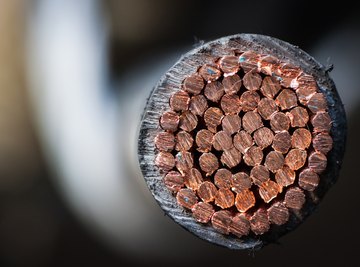

Electrical wiring is a key component in everything from power generation, telecommunications, consumer electronics and even the most simple circuitry work. At the core of electrical wires are conductive metals that allow electricity to transfer from point to point: The most conductive of all being silver, followed closely by copper. But despite silver's position as the most conductive metal on Earth, copper is the global standard in electrical work. Though silver wire has a higher conductivity, there are drawbacks to using it that make copper wire the better option in most situations.
TL;DR (Too Long; Didn't Read)
Though silver wire is roughly 7 percent more conductive than a copper wire of the same length, silver is a significantly rarer metal than copper. Combined with silver's tendency to oxidize and lose efficiency as an electrical conductor, the relatively minor increase in conductivity makes copper a more sensible option in most scenarios. Silver wire, however, is generally reserved for more sensitive systems and specialty electronics where high conductivity over a small distance is prioritized.
Conductivity Basics
Electrical conductivity is the measure of how well electric current flows through a given material. The more conductive a given material is, the less electricity will be lost as the current travels from point to point, which makes high conductivity crucial for wires carrying current over significant distances. It is measured in units of seimens per meter.
Silver and Copper Conductivity
Silver and copper are the two most conductive metals known to mankind, with gold following behind in third place. The conductivity of silver clocks in at 63 x 10^6 siemens/meter, roughly seven percent higher than the conductivity of annealed copper, which stands at 59 x 10^6 siemens/meter. Measured in ohms, the difference in the resistance (the amount of electricity lost as a current travels from point A to point B through a material) of 24-gauge, 1000-foot-long silver and copper wire is minor. The resistance of the copper wire is a mere 2 ohms higher.
Oxidation and Metal Rarity
Though the difference in the performance of silver and copper wire is clear, there are a few reasons that copper wire is used more frequently than silver. The most notable is the abundance of copper in comparison to silver. There is significantly more naturally-occurring copper than silver available on Earth, which makes the rarer, higher-performing metal significantly more expensive to produce. Silver is also more prone to the effects of oxidation, particularly in humid climates or highly acidic soils. Conductive metals (with the functional exception of gold) react to water, oxygen and/or sulfur and degrade over time into semiconductors, becoming much less efficient in moving electricity. While all metal wires degrade over time, silver’s high rate of degradation compared to its cost makes it a poor wiring option in many scenarios.
Metal Uses
As a result of silver's higher cost, silver wire and solder are a niche product. While copper is used in wires, connectors, printed circuits and other electrical parts across a number of industries, silver is generally used as a component in specialty electronics and sensitive systems, like industrial-grade switches and automobile contacts.
References
About the Author
Blake Flournoy is a writer, reporter, and researcher based out of Baltimore, MD. Working independently and alongside professors at Goucher College, they have produced and taught a number of educational programs and workshops for high school and college students in the Baltimore area, finding new ways to connect students to biology, psychology, and statistics. They have never seen Seinfeld and are deathly scared of wasps.