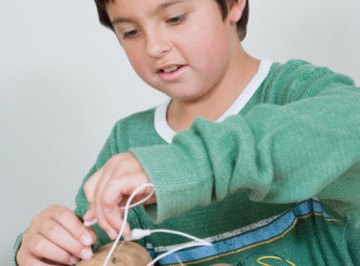
A simple and popular experiment for students is to test the electrical charges produced from various fruits and vegetables. In fact, the fruit or vegetable does not create a charge at all. The combination of using two different metals and the conductivity of the juice of the fruit or vegetable allows for current to flow. Each fruit and vegetable will have different conductivity levels which makes some fruits and vegetables better able to conduct electricity than others. Using a multimeter is the best way to test and compare each fruit and vegetable.
- Copper electrodes
- Zinc electrodes
- Multimeter
- Various fruits and vegetables
Different readings may also be taken during testing including resistance, which is measured in Ohms, and current produced which is measured in amps or milliamps.
Place one copper electrode and one zinc electrode into the fruit or vegetable. Begin testing with the electrodes placed at opposite ends as far apart as possible. The zinc and copper metals will react with the juices in the fruit or vegetable to create a battery.
Connect the leads from the electrodes to the multimeter. Make sure the multimeter is set to a voltage reading. Record the data. Repeat the experiment with the same fruit or vegetable multiple times to obtain an average for voltage produced.
Place the leads closer together and reconnect to the multimeter. Record any changes in the voltage produced by bringing the leads closer together.
Repeat Steps 1 through 3 for each fruit and vegetable selected for the experiment.
Things You'll Need
Tips
References
Tips
- Different readings may also be taken during testing including resistance, which is measured in Ohms, and current produced which is measured in amps or milliamps.
About the Author
Michael Carpenter has been writing blogs since 2007. He is a mortgage specialist with over 12 years of experience as well as an expert in financing, credit, budgeting and real estate. Michael holds licenses in both real estate and life and health insurance.
Photo Credits
Jupiterimages/Photos.com/Getty Images