gpointstudio/iStock/Getty Images
When your quest to be a bronzed beauty ends in a seriously bad spray tan, you might want to go into hiding until the tan fades -- but you don't have to. Using some easy -to-find skin care products, as well as discovering homemade remedies in your kitchen, allows you to buff away the bronze and return to your natural color.
Soften the Tan
Tackle that bad spray tan by first softening the color. Baby oil can help fade the color by loosening the top layer of tan. Climb into the bathtub, cover your skin with baby oil and let it sit for about 10 minutes before washing it off.
Several other tricks can help to soften a bad spray tan. Go swimming -- the chlorine can help fade the color. Similarly, saunas and steam rooms encourage quick color fading.
Scrub It Away
A quick exfoliating session might not restore your skin to its natural color, but several exfoliating products may help minimize the impact of your spray tan.
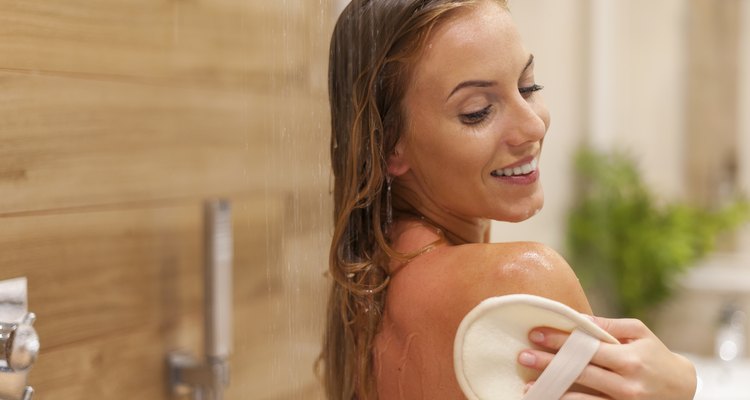
Lighten blotches, or areas of darkened skin, with exfoliating gloves. Hop in the shower, douse the gloves in lemon juice and gently rub them all over your skin, focusing on the blotches.
Some areas are more prone to blotches -- knees, elbows and feet -- especially if you don't exfoliate them before the tan. Dry skin on these areas quickly absorbs any moisture, including spray tan, which can lead to highly pigmented areas. A gentle exfoliating scrub used on these blotches may help soften the color of the tan.
Use Home Remedies
If your spray tan did not provide even coverage, you're left with streaks on your skin. Eliminate these varying shades with these home remedies:
-
Lemon juice: The citric acid in lemon juice can lighten your spray tan and exfoliate your skin. Try mixing the lemon juice with baking soda, another effective lightening agent, to successfully fade those streaks.
-
Sugar scrub. Whether you make a sugar scrub, which can be a simple combination of sugar and olive oil, or purchase one, this product will help even your color and soften those streaks.
The Finishing Touches
You've bathed, scrubbed and buffed away as much of that bad spray tan as you can. Take a few extra steps to bring your natural color back.
-
Moisturize: Keep your skin, especially the knees, elbows and feet, which are prone to dryness, well moisturized as your spray tan fades.
-
Touch up your skin: Choose a gradual tanning lotion or bronzer, and apply it to areas that need some color. For example, you may notice white lines across your knuckles or the side of your thumb. Additionally, areas that weren't adequately saturated with the spray tan might boast noticeable white spots. Working a touch of bronzer into these areas can even out your color.
Related Articles

How to Even Your Tan

How Long to Wait Before Taking a Shower ...

UV Tanning Vs. Spray Tanning
Tips on Getting Spray Tans If You're ...

How to Remove Blotches Caused by ...
Care for Hair After Foil Highlights
How to Get a Tan Without Getting ...

Difference Between Bronzing & Tanning ...

Spray Tanning & Scars
How Many Times Do You Have to Indoor ...

How to Fade a Hat Fast

Hollywood Makeup Tricks for Uneven Skin
Can You Get a Spray Tan After Being ...

How to Make a Spray Tan Last
How to Wipe Off Lip Stain

How to Get Tanner Faster With Self ...

How to Lighten Your Spray-on Tan
How to Restore Discolored Boots

How to Darken Permanently Lightened Hair

Fashion Tips on How to Wear Tan & Light ...
References
Writer Bio
Barbie Carpenter worked as a technical writer and editor in the defense industry for six years. She also served as a newspaper feature page editor and nationally syndicated columnist for the Hearst Corp. Carpenter holds a Bachelor of Science in journalism from the University of Florida and a graduate certificate in professional writing from the University of Central Florida.
Photo Credits
gpointstudio/iStock/Getty Images