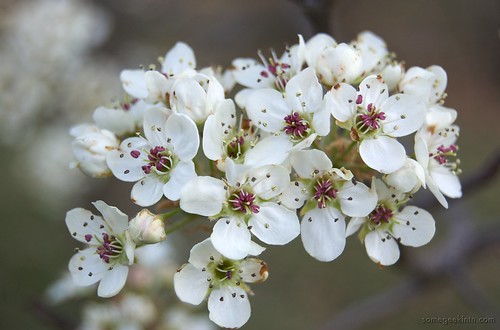
Beautiful in color and form, the Bradford pear tree is native to Asia. When introduced in the United States as an ornamental tree, it thrived. Wildlife love the fruits of the Bradford or Callery pear and an abundance of trees are spread via birds and squirrels, appearing seemingly out of nowhere overnight.
Names
Video of the Day
The Bradford pear tree is known scientifically as Pyrus calleryana. Bradford pears are quick-growing deciduous trees that reach approximately 50 feet high when mature. They produce white flowers and small, inedible fruit.
Video of the Day
Function
Bradford pear trees are primarily grown as ornamental trees for their spring flora. The fruits, which are inedible raw, can be used to make wine and seasonings.
Considerations
Pyrus calleryana seeds are considered mildly poisonous to humans. When ground between the teeth and ingested in large quantities, glycosides in the seeds mix with stomach acid to form cyanide.
Effects
It is hard for a human to ingest large enough quantities of Bradford pear seeds to cause even a mild reaction. When poisoning does occur, it may manifest as a mild fever, stomach upset and dizziness.
Fun Fact
The Sierra Club gave the Bradford pear the moniker of "Frankentree" because these originally sterile trees have hybridized over the years to gain the ability to produce fruit and seed.