
Noel Hendrickson/Digital Vision/Getty Images
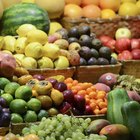
Fruits and vegetables around the world number in the thousands. These are categorized into different types or classes according to their shapes, textures, color or flavor. Some are exotic and found only in the country of origin. Others are exported and imported and are readily available on the worldwide market.
Color and Protection Against Disease
Comstock/Comstock/Getty Images
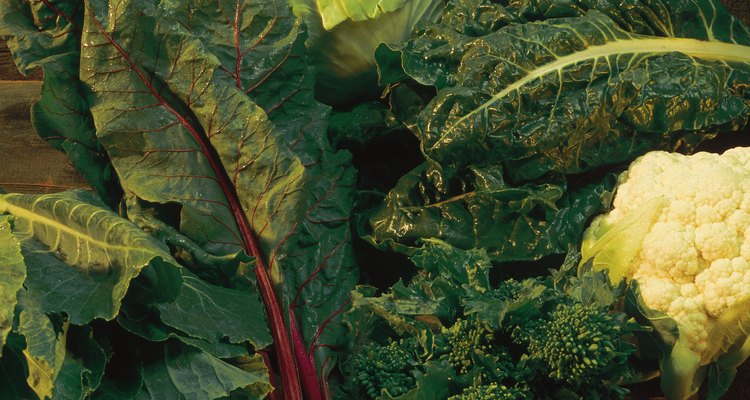
A simple way of classifying both fruits and vegetables is according to their color. The color of a fruit or vegetable is related to its health benefits because of chemicals in it that produce its color.
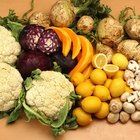
White fruits and vegetables, like broccoli sprouts, contain sulforaphane, a compound identified by Johns Hopkins scientists in 1992. Their research found sulforaphane reinforces the body's natural cancer-fighting resources.
According to researchers from the U.S. Department of Agriculture's Agricultural Research Service, the anthocyanins found in red cabbage and blue and purple foods, like blueberries and eggplant, protect the human body against cancer, improve brain function and help keep the heart healthy.
Green vegetables, such as kale and spinach, contain zeaxanthin. Scientists at the Kyoto Prefectural University of Medicine in 2001 found that this carotenoid inhibited cancer tumors on the skin and in the lungs of mice, alerting them to the possibility that it prevents cancerous tumor growth in humans.
Red fruits and vegetables, such as watermelon, tomatoes, red grapefruit and guava contain lycopene. The American Cancer Society reports that in some studies, people who have diets rich in lycopene have less risk of developing cancers of the lung, prostate and stomach. Surprisingly, red cherries and strawberries do not contain lycopene.
Categories of Fruit
Thinkstock/Comstock/Getty Images
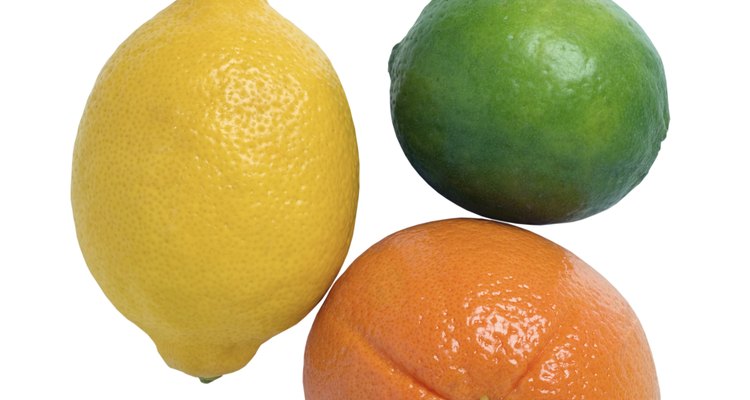
Fruits can be classified into biological categories. These fruit types include citrus: limes, mandarins, grapefruit, oranges and lemons and tropical exotic fruit, like bananas and mangoes. Another category includes stone fruit, which is also called tree fruit, such as plums, peaches, nectarines and apricots.
Added to these categories are the berries: strawberries, kiwifruit and blueberries and the melons: rock melons, honey dew melons and watermelons.
Tomatoes and avocados are also fruits and each represents a category type. Olives, too, are another type because olives are classed as fruits. Olive oil is a fruit juice.
Sub-classes of these types are numerous. These include one-stoned fruit (the date), segmented fruits (jackfruit), two-seeded fruits up to fruits containing 10 seeds (star fruit) and fruits containing more than 15 seeds: guava, kiwi, passion fruit, pomegranate and tree apple.
Vegetable Types
Comstock Images/Comstock/Getty Images
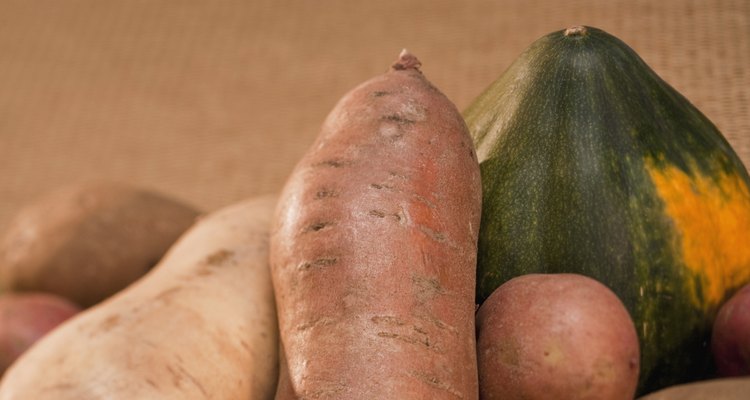
Vegetables are classified into families or biological groups. These are six in number: marrow (cucumber, pumpkin and zucchini); root (potato, yam and sweet potato); cruciferous (cabbage, broccoli, cauliflower); leafy green (lettuce, silverbeet and spinach); edible plant stem (asparagus and celery) and allium (onion, shallot and garlic.)
Vegetables are also categorized into seven other groups. These are the leafy green vegetables, root vegetables (beets, carrots and turnips); stalk vegetables (chard, fennel and kohlrabi); bulb vegetables (garlic, onion, chives and leek); tuber vegetables (taro, yam and cassava) and inflorescent vegetables (artichokes, cauliflower, broccoli rabe and broccoli.)
The seventh group is comprised of the fruit vegetables. These are olives, squash, avocados, cucumbers, peppers, tomatoes, tomatillos, okra, chayote and eggplant. They are not vegetables, but classed according to the Concise Oxford Dictionary of Botany’s definition of fruit, which is, “the ripened ovary of a plant and its contents… and seeds together with any structure with which they are combined.”
Related Articles

What Foods Provide Calcium D-Glucarate?
Vegetables That Are Considered to Be ...
Foods From Rainforest Plants

How to Juice a Daikon Radish

Information About the Orange Fruit
What Fruits Are Considered Aphrodisiacs?

The History of Butternut Squash
Which Nuts Are Alkaline Forming?
Different Names for an Eggplant

Nutrition Information on Blueberries
Nutrition: Fruit and Vegetable Colors
The Five Color Diet

Types of Greek Fruits & Vegetables

What Vitamins Help the Liver?
How Much Fiber Is in a Tangerine?

What Is the PH of Cranberry Juice?

List of Vegetables for the Paleo Diet

Fuji Apples Health Benefits

Which Vegetables Produce the Most ...

How to Get Rid of Purple Scars
References
Writer Bio
Francine Juhasz has a doctorate in clinical psychology and is a Qi Gong and yoga teacher, health and nutrition freelance journalist and featured self-help and life-skills speaker. For more than 30 years she has conducted programs, workshops, seminars and private counseling sessions in emotional, mental, marital and sexual health and fitness in universities, elder-care communities and community centers in both the U.S. and Europe.
Photo Credits
Noel Hendrickson/Digital Vision/Getty Images