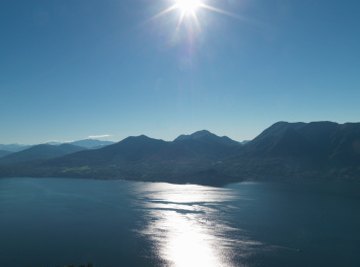
There are many different types of ecosystems. Aquatic ecosystems make up a large portion of the world's ecosystems and can be classified as either freshwater ecosystems or marine ecosystems. The inhabitants of any type of ecosystem will be adapted to survival in the particular set of conditions presented by that ecosystem.
Ecosystems
An ecosystem is a community held together by complex interactions between the biotic and abiotic factors in a given area. The biotic factors of an ecosystem are the living portions such as plants, animals, bacteria and fungi. The abiotic factors include the soil, water and other nonliving items present in an environment. An ecosystem can be as large as a desert or as small as tide pool. There will only be as many living things as can be supported by the food supply. Interactions such as predator-prey and food web relationships determine the population of an ecosystem. Each living thing has a role to fulfill that contributes to the overall success and survival of the ecosystem.
Marine Ecosystems
The term marine refers to an ecosystem related to the oceans. According to the Environmental Protection Agency, EPA, marine ecosystems make up approximately 70 percent of the world's ecosystems. Marine ecosystems are unique because of the suspended dissolved compounds in the water, most notably salt. Organisms as tiny as microscopic plankton and as large as whales inhabit the various types of marine ecosystems. Marine ecosystems include the oceans, estuaries and salt marshes, coral reefs, mangrove forests, lagoons, kelp seagrass beds and the intertidal zone that stretches onto beaches.
Freshwater Ecosystems
There are many types of freshwater ecosystems. Rivers, lakes, ponds and streams are the most common freshwater sources. Reservoirs, wetlands and groundwater sources are also considered freshwater ecosystems. Freshwater ecosystems do not contain the same dissolved substances in the water as marine ecosystems do, so the animals and plants that live there would not survive in a marine ecosystem. Because freshwater does not contain salt, it is more susceptible to freezing and thawing. Freshwater plants and animals have adapted to survive this process. They also have respiratory structures adapted specifically for freshwater and have evolved reproductive and feeding behaviors that enable them to survive successfully in their environment.
References
About the Author
Carolyn LaRoche began writing professionally in 2010 as a freelance writer for various websites. She has a Bachelor of Arts in biological sciences/premedical studies from the State University of New York, Oswego, and a Master of Science in forensic chemistry from the University of New Haven.
Photo Credits
Buena Vista Images/Photodisc/Getty Images