Potassium carbonate, also known as potash in its crude form, has the chemical symbol K2CO3. It can be made by burning organic material and using the ash that is produced. This is because potassium and carbon are present in many living things.
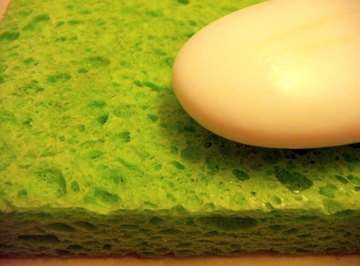
Potash is used in the making of soap and glass and was traditionally produced through the burning of organic material and the crystallization of the potassium carbonate for hundreds of years.
- Organic material -- e.g., plants, tree branches, reeds
- Well-ventilated container
- Watertight containers
- Cotton sheet
- Pan
The pan used to crystallize the potassium carbonate should not be reused for normal domestic tasks.
Identify organic material -- e.g., tree branches or reeds -- to make the ash as the first step in making potassium carbonate. Most plants and trees contain potassium carbonate; just in varying amounts. If using trees, be sure to include leaves and branches, as this is where the most potassium is located.
Burn this organic material in a container that is well-ventilated, as oxygen is necessary for these chemical reactions. This oxygen will combine with the carbon within the organic material to produce the CO3, or carbonate, part of the potassium carbonate.
Transfer the ash, when completely burned, into watertight containers and cover the ash entirely with water. Leave the ash in these containers for at least 24 hours. During this soaking, the potassium carbonate or potash will dissolve in the water; the remainder of the ash is not soluble.
Filter the ash through a cotton sheet into a container. Place the ash on the cotton sheet, turning up the edges of the sheet to prevent spillage, and pour cold water over the ash. Collect this water, which will contain the dissolved potassium carbonate.
Place this water in a pan over heat. Slowly boil off the water from the potassium carbonate. Continue this until crystals form in the bottom of the pan, within a concentrated solution. More crystals will form upon cooling; these are crystals of potassium carbonate, which are formed when there is no longer enough water present for the molecules to remain in the solution.
These crystals are a crude form of potassium carbonate, or potash.
Things You'll Need
Warnings
References
About the Author
Jess Smith has been a writer and editor since 2008. She served as co-editor-in-chief for the "Edinburgh University Science" magazine. Smith holds a Master of Science in neuroscience from the University of Edinburgh.
Photo Credits
sponge and soap image by robert mobley from Fotolia.com