
Although few light sources produce no UV at all, most bulbs fall well within accepted safe limits. In particular, incandescent, LED and sodium vapor bulbs all emit very small amounts of UV radiation. According to the National Institutes for Health, Compact Fluorescent Lamps have the potential for emitting ultraviolet light, a high-energy, invisible form of light that can cause sunburn, skin cancers and other problems. The coiled bulb’s internal phosphor coating can crack, allowing small amounts of UV light to pass through.
Long Fluorescent Tubes
In all fluorescent bulbs, an electric current in a low-pressure mercury vapor produces ultraviolet light. The UV strikes a phosphor coating on the inside of the bulb, which emits white light by fluorescence. Although all fluorescent lamps have the potential for leaking some UV light, the phosphor coating blocks the vast majority of it. The long fluorescent tubes used in home and office lighting fixtures produce very little ultraviolet light. The phosphor cracking issue in CFLs is not a problem with long fluorescent tubes.
Standard Incandescent Bulb
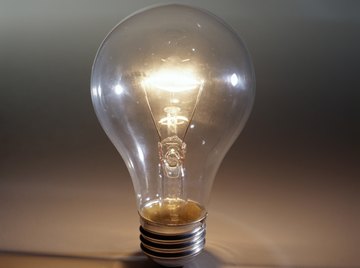
A traditional incandescent bulb produces white light from a tungsten filament heated by an electric current. The light from these bulbs has a very broad spectrum, a very small part of which is ultraviolet. Generally, the hotter the filament, the more UV it produces, although most incandescent light bulbs are designed to minimize UV.
Light Emitting Diode
Light-emitting diodes generate light from a semiconductor material; the color of the light depends on the material in the lamp. Lighting engineers call LEDs “monochromatic” because they produce a light that primarily consists of a single color. An LED bulb converts blue light into white light with the use of phosphors. The relatively pure blue light from the LED has almost no UV.
Sodium Vapor Lamp
Many street lights have bulbs that use a sodium-vapor technology. The sodium-vapor bulb is extremely efficient, producing large amounts of yellow light with little electricity. The light from sodium vapor is concentrated entirely in the yellow part of the spectrum; it contains virtually no ultraviolet.
References
- National Institutes for Health: Ultraviolet Leaks from CFLs
- Georgia State University: Sodium Spectrum
- San Jose State University: Spectrum of Incandescent Light Bulb
- National Public Radio: Energy-Efficient Light Bulbs May Have Dark Side When It Comes to Health
- Food and Drug Administration: Radiation-Emitting Products
About the Author
Chicago native John Papiewski has a physics degree and has been writing since 1991. He has contributed to "Foresight Update," a nanotechnology newsletter from the Foresight Institute. He also contributed to the book, "Nanotechnology: Molecular Speculations on Global Abundance." Please, no workplace calls/emails!
Photo Credits
Spike Mafford/Photodisc/Getty Images