
The Advantages of Actual Frog Dissection
Technology has advanced to the point today where frog dissection can be done virtually. Digital photography in textbooks and science websites is very precise. This method can teach a student a lot about biology and anatomy. Some experts, however, protest that virtual dissection is not a valid alternative. Without an actual animal, a student can see the makeup of frog but cannot fully experience it.
-
Feeling
-
Though photographs are helpful, a student will not experience the tactile feeling of the frog. In actual dissection a student must use his or her hands to cut the frog open and pull out the organs. Virtual dissection does not offer this opportunity.
Future
-
Future doctors, biologists, and other scientists may need at some point to perform surgery or dissections. Practice with actual dissection provides good training for such tasks and a good way for a young person to understand the process. It also gives a student the chance to discover whether he or she possesses aptitude for this kind of work.
-
Lasting Impression
-
Virtual dissection does not create the same lasting impression or vivid memory as actual dissection. Textbook and Internet images are something students see everyday, but an actual once-living thing stays with a person. It has an impact.
Self-Discovery
-
If a student has moral objections to frog dissection, that can be a good thing and lead to possibilities for self-discovery. No student should be forced to partake in actual dissection if he or she objects to it, but the act of making that decision is also an important part of education.
Surprises
-
In virtual dissection there are no surprises. Dissection is a good way to learn about the structure of all living creatures, and it's interesting to see how the frog of another student may be different than yours. In virtual dissection all the frogs are the same.
-
References
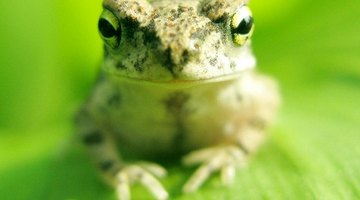
- Photo Credit Image by Flickr.com, courtesy of SACHIN SANDHU
Comments
-
virtualisbetter
Dec 16, 2009
Further, the suggestion that future doctors need to participate in dissection is simply inaccurate. An overwhelming percentage of medical schools in the U.S.approximately 95%use no live animals in their training. Instead, they use skills trainers and then, once students have mastered these basics, the students participate in clinical rotations while supervised by experienced doctors. The students learn by helping real patients through performing real surgeries, instead of needlessly harming animals. References A. Knight, "The Effectiveness of Humane Teaching Methods in Veterinary Education," ALTEX 24.2 (2007): 91109. H.K. Motoike et al., "Clay Modeling as a Method to Learn Human Muscles: A Community College Study," Anatomical Sciences Education 2.1 (2009): 1923. G.J. Patronek and A. Rauch, "Systematic Review of Comparative Studies Examining Alternatives to the Harmful Use o... -
virtualisbetter
Dec 16, 2009
References A. Knight, "The Effectiveness of Humane Teaching Methods in Veterinary Education," ALTEX 24.2 (2007): 91109. H.K. Motoike et al., "Clay Modeling as a Method to Learn Human Muscles: A Community College Study," Anatomical Sciences Education 2.1 (2009): 1923. G.J. Patronek and A. Rauch, "Systematic Review of Comparative Studies Examining Alternatives to the Harmful Use of Animals in Biomedical Education," Journal of the American Veterianry Medical Association 230.1 (2007): 3743. J.R. Waters et al., "Cat Dissection vs. Sculpting Human Structures in Clay: An Analysis of Two Approaches to Undergraduate Human Anatomy Laboratory Education," Advances in Physiology Education 29.1 (2005): 2734. -
virtualisbetter
Dec 16, 2009
Non-animal learning methods extend far beyond just photographs. Highly interactive computer simulations offer repeatability, flexibility, and often simulated biological variation. Also, if hands-on learning is desired, there are lots of models that provide thissuch as Anatomy in Clays muscle sculpting models that have been shown to teach human anatomy better than cat dissections do. (Waters et al 2005; Motoike et al 2009) -
virtualisbetter
Dec 16, 2009
This "fact sheet," sadly, doesn't agree with what peer-reviewed educational research has shown. A recently published peer-reviewed journal article concluded that "alternatives are a viable method of instruction in the field of biomedical education." (Patronek and Rauch 2007) In all 17 studies that the authors reviewed, results associated with the non-animal method of instruction were equivalent or superior to results associated with the conventional animal-based method, including dissection. Another recent publication reiterated these results, concluding that non-animal methods have been responsible for providing students with "superior understanding of complex biological processes, increased learning efficiency, and increased examination results." (Knight 2007) Non-animal learning methods extend far beyond just photographs. Highly interactive computer simulations offer repeatabil...