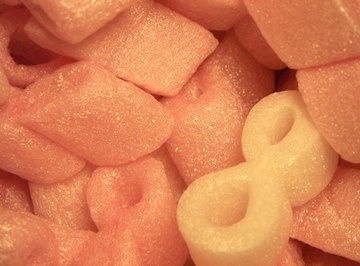

Styrofoam (also known by the generic term “extruded polystyrene foam”) is one of the most widely used types of plastic today. The brand name “Styrofoam” is owned by Dow Chemical. It was invented by Ray McIntire during World War II. McIntire was trying to find a flexible electrical insulator when he made the accidental discovery. Styrofoam was introduced to the United States in 1954. Other lesser-known brand names for extruded polystyrene foam include "Foamular, ""Greenguard" and "Foamcore". Supplied to manufacturers as small foam beads, this versatile material can be processed and molded to fit a variety of purposes. Not only is polystyrene applied to such uses as Styrofoam, but it is a key component in napalm, CD jewel cases and many disposable plastic containers as well.
Thermoplastic
One of Styrofoam’s main physical properties is that it is a thermoplastic. This means that the material is solid at room temperature, but flows as a liquid when heated to a specific point. As a liquid, the Styrofoam can be molded in fine detail. This property makes it easy to utilize for many industries and applications. The main uses of this material today include insulation, packing material and craft material.
Lightweight & Shock Absorber
Styrofoam is that it is extremely lightweight. In addition it is an excellent shock absorber. This is due to the fact that Styrofoam is approximately 90 percent air. This makes the substance ideal for use as a packing material. The lightweight material is easy to transport, yet it effectively absorbs trauma, protecting the product from harm.
Insulator
Styrofoam is an excellent insulator. The material limits thermal transfer. Thus, a structure insulated with Styrofoam will maintain a comfortable temperature inside, regardless of the conditions on the outside.
About the Author
Alexis Writing has many years of freelance writing experience. She has written for a variety of online destinations, including Peternity.com. She holds a Bachelor of Arts in communication from the University of Rochester.
Photo Credits
styrofoam business image by robert mobley from Fotolia.com