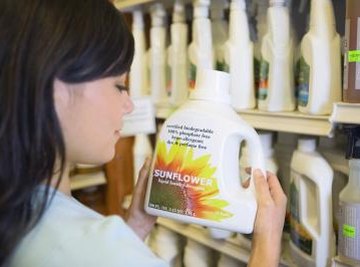

Sodium carbonate, also known as washing soda, is a common ingredient in laundry detergents. When dissolved in water, it tends to form solutions with pH values between 11 and 12.
Water
Water, H?O, undergoes a process known as autodissociation, in which it separates into a hydrogen ion (H?) and a hydroxide ion (OH?):
H?O ? H? + OH?
pH
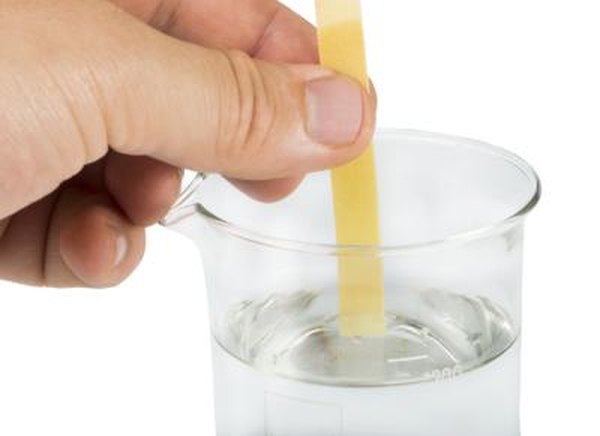
pH is actually a measure of the amount of H? in a solution and ranges from 0 to 14.
In general terms, a pH greater than 7 indicates an alkaline (or basic) solution (more OH? than H?). A pH less than 7 indicates an acidic solution (more H? than OH?). A pH of 7 indicates a neutral solution, such as water (H? and OH? are equal).
Sodium Carbonate
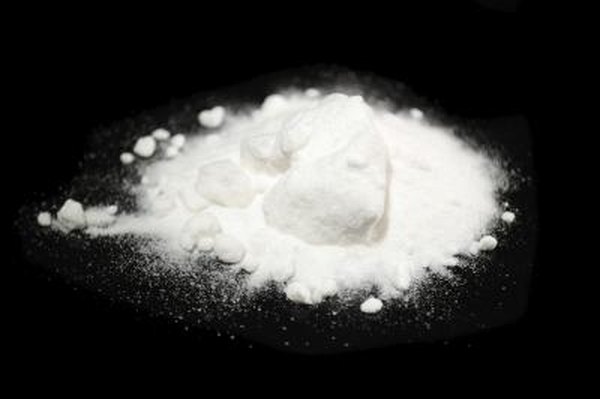
Sodium carbonate (Na?CO?), also known as washing soda, produces sodium ions (Na?) and carbonate ions (CO?²?) when dissolved in water:
Na?CO? ? 2 Na? + CO?²?
The sodium ions have no influence on the pH of the resulting solution. The carbonate ions, however, are basic and make the solution alkaline by increasing the amount of OH?:
CO?²? + H?O ? HCO?? + OH?
Concentration and pH
The important part of pH is that it depends on concentration. That is, dissolving two tablespoons of sodium carbonate in a glass of water will result in a higher pH than dissolving one tablespoon.
Mixing Instructions
One gram (0.035 ounces) of sodium carbonate dissolved in water and diluted to 1.0 liter (about 1 quart) will produce a solution of pH 11.37.
Five grams (0.18 ounces) of sodium carbonate dissolved in water and diluted to 1.0 liter (about 1 quart) will produce a solution of pH 11.58.
Ten grams (0.35 ounces) of sodium carbonate dissolved in water and diluted to 1.0 liter (about 1 quart) will produce a solution of pH 11.70.
References
Photo Credits
Jupiterimages/Creatas/Getty Images