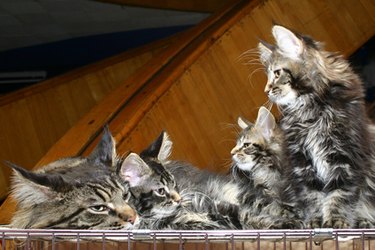
Cats are great pets but they need attention, care, and a clean home. Cleaning up cat urine and feces is not the most appealing job but it must be done, and carefully. Unfortunately, besides its unpleasant strong odor, cat urine can potentially cause some sickness and disease. With a few simple precautions, however, most of these are easily avoided.
Toxoplasmosis
Video of the Day
Toxoplasmosis is a disease caused by the parasite Toxoplasma gondii, most commonly found in the waste of outdoor cats, and is particularly dangerous for pregnant women. The parasite can enter the body and cause serious damage to an unborn child, even causing still birth or miscarriage. Other side effects include jaundice, eye problems, mental retardation and deafness. Pregnant women can avoid toxoplasmosis by simply wearing gloves while changing the litter box. If your cat spends a great deal of time outdoors, wash your hands after having contact with the cat as well. Technically, toxoplasmosis is transmitted in feces, but since it is difficult to separate feces from urine in a litter box, precautions should be taken when dealing with either.
Video of the Day
Asthma
Cat urine will not cause asthma, however the ammonia present in the urine can trigger asthma attacks. People with asthma can still own cats but they need to be quite vigilant about keeping the litter box clean. Those with asthma should take extra precautions when cleaning up cat urine and feces. Wearing gloves and a mask will reduce the chances of ammonia entering your system and triggering an attack.
Lung Irritation and Bronchitis
Generally, people that have healthy immune systems are not made ill by breathing in the ammonia in cat urine. However people with allergies or weakened immune systems can suffer irritation in the lungs and even bronchitis if the exposure is long-term or extreme. For those with weakened immune systems even breathing in small amounts of cat urine can lead to fits of coughing and difficulty breathing.
Always check with your veterinarian before changing your pet’s diet, medication, or physical activity routines. This information is not a substitute for a vet’s opinion.