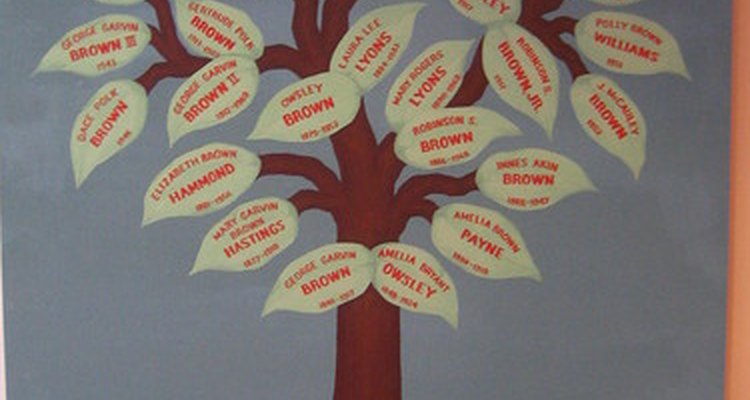
“Family heritage” describes broad categories related to genealogy, family trees and ethnicity. Historical research into your family heritage can add insight into why your family lives in a particular part of the country, where certain traditions came from or even whether you can join certain clubs.
Documentation
Research into family history relies frequently on documentation to prove facts about families, parents, children and ancestors. Documentation includes government records such as military, census, land, court, marriage and death records. It also can include newspaper accounts and handwritten memories from older relatives.
Misconceptions
Family heritage oral and written information can often be wrong. Traditional oral stories can be embellished, and wrong written information can quickly spread to many people without being verified with documentation. In addition, language translation problems have caused confusion over the years. An example: Pennsylvania Dutch are often actually "deutsche," or German, according to the Pennsylvania German Society.
Famous Ties
Research into your own or others' family heritage can show an illuminating melting pot of family ties, especially in the United States. With strong research, people sometimes find that their Irish ancestors were actually Scottish, or what they thought were only African American ancestors actually had Anglo-Saxon branches and vice versa.
Benefits
Knowing the medical history of your family heritage can have benefits to you. Finding patterns of particular illness and disease in your family can help you know what tendencies might "run in the family," giving you an opportunity to avoid risk factors, and giving your doctor information that could help with diagnoses.
Help from Religious Institutions
In addition to documentation through government records, many family heritage researchers find out facts through religious records, such as family Bibles or church records. Different denominations place different emphasis on these records. Members of The Church of Jesus Christ of Latter-day Saints consider genealogy as part of their religion, and gather and keep vast records.
Warning
The Internet has helped researchers share family heritage information, but it also allowed the quick sharing of inaccurate information. Use caution when judging other people's research into your own family tree, and carefully check the citations of documents they used in their research before accepting information as fact.
Related Articles

How to Figure Out My Scottish Clan

How to Find Ancestry in Singapore

How to Trace Haitian Ancestry

How to Give a Written Analysis of a ...

How to Trace Your Family Tree for Free

How to Find Out Where Your Family Came ...

How to Find Someone's Birth City & ...

How to Find Lost Relatives

Obituary Wording Help

What Are Cultural Variables?
What Is a Family Crest?
How to Design a Headstone
What Is a Paternal Family Tree?

How to Tell If You Have Italian Ancestry

What Is the Meaning of Judgmental?

The Meaning of Allium Flowers

Family Tree Book Cover Ideas

Are Bell Peppers Nightshade Vegetables?
How to Make a Family Tree Using a Free ...

How to Deal With My Girlfriend When She ...
References
Resources
Writer Bio
Andria Krewson has worked in design, technology, editing and writing for newspapers since 1985. She has written for "PBS MediaShift," "ReadWriteWeb" and "Crossroads Charlotte." She began working at newspapers in 1982 as a copy editor. Krewson holds a certificate in technology and communications from the University of North Carolina and a Bachelor of Arts in journalism from the University of Georgia.
Photo Credits
Image by Flickr.com, courtesy of Rick Audet