

The Lenni-Lanape are the original inhabitants of present-day New Jersey, Connecticut, Pennsylvania, New York and Delaware; they are also known as the Delaware Indians. The word "Lanape" means "the people," and "Lenni-Lanape" means "true people," or, according to the tribal website of the Delaware Nation, "the godfathers." Today, about 1,600 Lanape people live in four communities in Oklahoma and southern New Jersey.
Land of the People
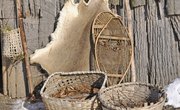
The Lanape called their land "Lenapehoking," which means "land of the people." They lived on the land in villages of 200 to 300 as well as in small bands of 25 to 50 individuals. Everyone had a job. Men cleared the land, made houses, trapped animals and birds, and in times of war, defended the land from intruders. Women planted and harvested crops, gathered nuts and berries, collected maple sap and boiled it down to make syrup, wove baskets and made clothing and and coverings for shelter from animal hides. Family ties were strong, and lineage was traced through the mother's family. The Lanape had three clans -- Wolf, Turtle and Turkey -- and marrying within one's clan was forbidden.
Lenape Style
The Lenape lived in wigwams, which are domed-shaped shelters framed with sticks and twigs and covered with tree bark and animal hides. They also used animal skins -- primarily deer and beaver -- to make clothing and moccasins. Women wore their hair long -- sometimes in braids -- while men sometimes plucked out all their hair by the roots except for a small spot on the top of the head. Men tattooed themselves with pictures of animals, birds or snakes, while women used paint made with bloodroot and bear grease to adorn their cheeks and foreheads.
Living Off the Land
Like many eastern woodland tribes, the Lenape relied heavily on the "three sisters" -- maize, beans and squash, for sustenance. They ate corn-on-the-cob, corn and bean patties, soup bread and boiled or baked squash from plates and bowls made from bark and utensils made from wood. The women hung corn, squash and other foods to dry in the hot summer sun and rehydrated these foods in boiling water to get through the long northeastern winters. They also stored dried food in holes dug in the ground and lined with mats and grasses. The Lenape used herbs -- particularly tobacco -- for ritual ceremonies and to heal ailments, such as asthma.
Four Tribal Groups
The Lenape people were forced from their ancestral homelands by the British. Despite being the first Indian tribe to sign a treaty with the American government, most Lanape were relocated to Oklahoma in the mid-1800s. Two bands presently occupy reservations in Oklahoma -- The Delaware Nation and The Delaware Tribe of Indians -- and both are federally recognized Indian tribes. Some Lanape remained in New Jersey and formed two groups: The Naticoke Lanni-Lanape and The Nanticoke Lenni-Lanape Tribal Nation. Both are recognized as Indian tribes by the state of New Jersey, but the federal government recognizes neither of them.
Related Articles



Writer Bio
Chris Deziel has a bachelor's degree in physics and a master's degree in humanities. Besides having an abiding interest in popular science, Deziel has been active in the building and home design trades since 1975. As a landscape builder, he helped establish two gardening companies.