Chicken Comb for Knee Pain
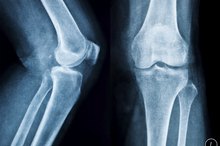
Arthritis is one of the most common complaints that orthopedic doctors encounter. The knee is particularly susceptible to this crippling disease, where the cartilage covering the knee joint slowly erodes away, leaving bone to scrape painfully on bone. Treating osteoarthritis of the knee has always been a tricky business, as once it is established, arthritis is not a disease that can be cured.
If you are experiencing serious medical symptoms, seek emergency treatment immediately.
One of the most recent discoveries for treating arthritis in the knees is the use of hyaluronic acid, which is derived from the combs of chicken. By injecting this substance into the knee joint, the body uses it as a form of bio-lubricant, coating the bones and allowing them to slide smoothly rather than grate together.
Significance
The relief provided by the hyaluronic acid, also called synvisc, is the most significant aspect of the injection. By building up a supply of synvisc over a period of weeks, the body begins to incorporate the fluid into the joint spaces of the knee, filling it with the slippery fluid that then serves as a makeshift cartilage replacement. The kneecap, which has to slide into the femoral groove of the lower leg bone to flex properly, can move smoothly over the top of the bone as it did before the arthritis ate away the healthy cartilage. This creates a cessation of pain, which is the main and most significant result of the injections.
Another significant result of this injection is the delay or cancellation of the need for surgery. In some cases, patients may continue the synvisc injections and never need to have their knee operated on for pain relief.
- The relief provided by the hyaluronic acid, also called synvisc, is the most significant aspect of the injection.
- By building up a supply of synvisc over a period of weeks, the body begins to incorporate the fluid into the joint spaces of the knee, filling it with the slippery fluid that then serves as a makeshift cartilage replacement.
Administration
What Are the Treatments for Bone Spurs on the Elbow?
Learn More
The chicken comb derivative, synvisc, is in liquid form. The patient can have the injection in the doctor's office. The knee will be cleaned and an antiseptic solution applied to the injection site.
In some cases a numbing agent may be injected into the skin surrounding the injection area, as the needle that is used to inject the synvisc is very large, sometimes as large as 18 gauge. The needle is inserted into the middle of the knee joint, and the synvisc, usually a large amount, is injected slowly into the space underneath the kneecap.
The injection is uncomfortable and the patient must rest for a couple of days after the injection to allow the medicine to absorb and the joint to heal from the irritation of injection. This procedure will be done once a week for five weeks, at which time the full effect of the medication should be felt.
- The chicken comb derivative, synvisc, is in liquid form.
- In some cases a numbing agent may be injected into the skin surrounding the injection area, as the needle that is used to inject the synvisc is very large, sometimes as large as 18 gauge.
Duration
The duration of the effect of the synvisc varies. Just as no two patients are identical, this treatment will never affect two people exactly the same. But the trials have been promising. In some cases, injections of synvisc have lasted up to a year or more. In these cases, the patient often can simply return for additional treatment once the body has completely absorbed the medication - thereby delaying surgery indefinitely. In most cases, patients see the relief from the synvisc fade anywhere from six months to a year, and must return for more treatments.
For some patients, there is no relief from the injections of synvisc, and surgery may be the only option. But, for those who suffer from end-stage osteoarthritis, it is certainly worth the effort to try the injection before major surgery is attempted.
- The duration of the effect of the synvisc varies.
- In most cases, patients see the relief from the synvisc fade anywhere from six months to a year, and must return for more treatments.
Misconceptions
What Are the Treatments for Bone Spurs in Hands?
Learn More
One of the common misconceptions about the synvisc injection is that it is a cure for osteoarthritis 1. It is not. **There is no cure for arthritis.
** Once the patients bones have deteriorated to the point where these injections are needed, there is no healing. The damage at this point has been done, and now the patient is simply working with damage control.
Losing weight, eating foods that are rich in calcium such as broccoli and spinach, getting proper exercise, and doing physical therapy are all steps that can and should be taken while taking the synvisc injections. But remember, this is not a cure, at all--only a relief.
- One of the common misconceptions about the synvisc injection is that it is a cure for osteoarthritis 1.
- Once the patients bones have deteriorated to the point where these injections are needed, there is no healing.
Warning
There are hyaluronic acid supplements available now in some forms over the counter, or for veterinary use. Do not try and self-treat your knee with these products. Taking hyaluronic acid in drinks may or may not help over a long period of time, but some people make the mistake of thinking they can inject themselves with the products that are available for animals. This can be a deadly mistake.
Not only are you risking infection of the joint by using a product not approved for people, you are risking losing your limb because of that infection, and possibly even losing your life.
Only in the hands of a medical professional should you ever submit yourself to injections of any medication into your knee joint. There is too much at risk.
- There are hyaluronic acid supplements available now in some forms over the counter, or for veterinary use.
- Taking hyaluronic acid in drinks may or may not help over a long period of time, but some people make the mistake of thinking they can inject themselves with the products that are available for animals.
Related Articles
What Are the Treatments for Bone Spurs on the Elbow?
Learn More

What Are the Treatments for Bone Spurs in Hands?
Learn More

What Causes Kneecap Pain When Walking??
Learn More

Exercises for Adhesive Capsulitis of the Hip
Learn More
Treatment for Knee Effusion
Learn More

How to Drain Fluid From a Knee
Learn More
Elbow Hyperextended Treatment
Learn More
What is a Valgus Knee Brace?
Learn More
What Are the Treatments for Bone Spurs on the Leg Bone?
Learn More
What Are the Causes of Burning Hip Pain?
Learn More
References
- Intra-articular Hyaluronic Acid Injections for Knee Osteoarthritis
- Cleveland Clinic. Viscosupplementation for osteoarthritis of the knee.
- Cleveland Clinic. Hylan G-F 20 intra-articular injection.
- U.S. Food and Drug Administration. Summary of Safety and Effectiveness Data Synvisc-One.
- Altman R, Lim S, Steen RG, Dasa V. Hyaluronic acid injections are associated with delay of total knee replacement surgery in patients with knee osteoarthritis: Evidence from a large U.S. Health claims database [published correction appears in PLoS One. 2016;11(1):e0148591]. PLoS One. 2015;10(12):e0145776. Published 2015 Dec 22. doi:10.1371/journal.pone.0145776
- American Academy of Orthopaedic Surgeons. Viscosupplementation for knee arthritis. Updated June, 2015.